Concrete pump trucks are specialized construction vehicles designed to transport and place liquid concrete efficiently and accurately. In large infrastructure and commercial projects, traditional placement methods such as manual transport or crane buckets are often slow and labor-intensive.
Concrete pumping technology was developed to improve speed, consistency, and precision in structural concrete placement. Today, hydraulic concrete pump trucks and high-pressure concrete pumping systems are widely used in high-rise construction, bridges, highways, tunnels, and industrial foundations.
These machines combine mechanical engineering, hydraulic systems, and heavy-duty vehicle design to deliver continuous concrete flow across long distances and significant heights.
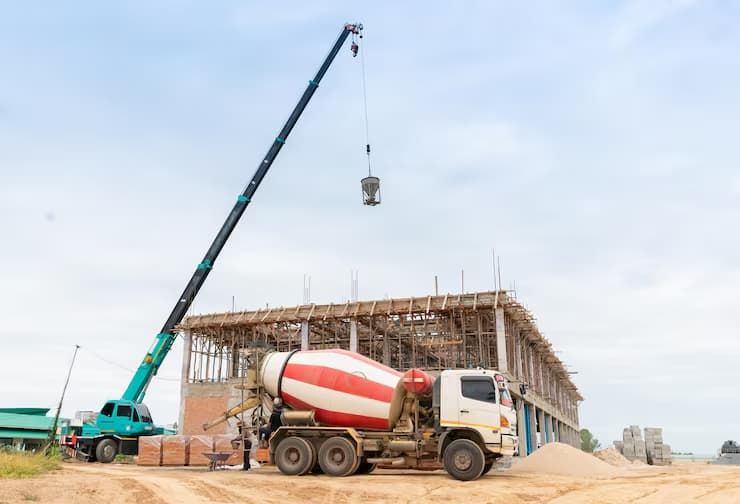
What Concrete Pump Trucks Are and Why They Exist
A concrete pump truck is equipped with a pumping unit and delivery pipeline that transfers freshly mixed concrete from a mixer truck directly to the placement location.
Before pump technology, workers relied on wheelbarrows, cranes with buckets, or conveyors. These methods increased labor requirements, reduced efficiency, and often caused inconsistent placement.
Concrete pumping systems exist to address:
-
Long-distance horizontal transfer
-
Vertical placement in tall buildings
-
Continuous pouring for large slabs
-
Faster completion of infrastructure projects
Modern urban development depends on advanced truck-mounted concrete pumps to maintain workflow efficiency and structural reliability.
Concrete pump trucks are typically categorized into two primary types.
Concrete Boom Pump Trucks
Boom pump trucks feature a robotic arm (boom) mounted on the vehicle. The articulated arm can extend vertically and horizontally, allowing precise placement in elevated or complex areas.
Common applications include:
-
High-rise residential and commercial towers
-
Bridge decks and flyovers
-
Large-scale commercial slabs
-
Industrial facilities
Concrete Line Pump Trucks
Line pump trucks use flexible hoses connected to steel pipelines. They are often smaller and better suited for projects with limited access.
Typical applications include:
-
Residential foundations
-
Sidewalks and driveways
-
Small commercial sites
-
Confined urban spaces
Both systems operate using hydraulic pistons that create pressure to push liquid concrete through pipes in a controlled and steady flow.
Importance: Why Concrete Pumping Matters Today
Construction projects today demand efficiency, safety, and structural precision. Rapid urbanization and infrastructure growth require reliable concrete placement systems that can operate under tight schedules.
Concrete pump trucks contribute to:
-
Faster construction timelines
-
Reduced manual labor risks
-
Greater placement accuracy
-
Improved structural integrity
-
Consistent concrete flow rates
High-rise concrete pumping technology enables vertical construction without interrupting structural continuity.
Sectors that rely heavily on concrete pumping equipment include:
-
Transportation infrastructure
-
Renewable energy foundations
-
Commercial real estate
-
Public utilities and civic projects
In dense metropolitan areas, limited working space and strict safety standards make pumping systems essential rather than optional.
Recent Updates and Industry Trends in 2025
The concrete pumping industry has seen notable developments over the past year.
In early 2025, manufacturers introduced enhanced energy-efficient hydraulic systems designed to reduce fuel consumption while maintaining high output pressure. These upgrades align with broader sustainability goals in heavy construction equipment.
Telematics integration has expanded significantly since late 2024. Modern systems now allow real-time monitoring of:
-
Pump pressure performance
-
Boom angle and positioning
-
Fuel efficiency
-
Maintenance alerts
-
Equipment diagnostics
Hybrid and electric concrete pump trucks have gained attention in 2025, particularly in regions implementing stricter emission targets. Pilot programs in parts of Europe and Asia aim to reduce construction-site emissions without compromising performance.
Automation features are also improving operational reliability. Remote-control systems, digital safety interlocks, and automated lubrication mechanisms are becoming standard in newer models.
Digital monitoring and energy-efficient concrete pumping systems represent a key trend shaping the construction equipment market in 2025.
Laws and Policies Affecting Concrete Pump Trucks
Concrete pump trucks operate under multiple regulatory frameworks, including transportation laws, workplace safety standards, and environmental rules.
In the United States, oversight involves:
-
Occupational Safety and Health Administration (OSHA) construction safety standards
-
Department of Transportation (DOT) vehicle weight and highway compliance regulations
These regulations cover:
-
Proper outrigger deployment
-
Maximum axle load limits
-
Operator certification requirements
-
Routine safety inspections
In the European Union, equipment must comply with CE marking requirements and Stage V emission standards designed to limit engine emissions.
In India, relevant guidelines align with:
-
Ministry of Road Transport and Highways (MoRTH) regulations
-
Central Pollution Control Board (CPCB) emission norms
Compliance ensures safe operation within urban areas and supports environmental protection goals.
Regulatory standards play a critical role in maintaining safe and responsible concrete pumping operations.
Tools and Resources for Concrete Pumping Projects
Construction professionals use several tools and digital platforms to enhance planning and equipment performance.
Common resources include:
• Concrete Volume Calculators – Estimate cubic meters required for a project.
• Pump Pressure Calculation Tools – Determine pressure needs based on height and distance.
• Fleet Telematics Systems – Monitor equipment usage and maintenance schedules.
• Construction Project Management Software – Coordinate site logistics.
• Preventive Maintenance Checklists – Standardize inspection procedures.
• Operator Safety Training Programs – Support compliance with safety regulations.
Below is a simplified comparison of pump types:
| Feature | Boom Pump Truck | Line Pump Truck |
|---|---|---|
| Best Suited For | High-rise & large projects | Small to mid-size projects |
| Reach | Extended vertical reach | Flexible hose routing |
| Setup Time | Moderate | Faster |
| Site Space | Requires larger area | Suitable for tight spaces |
| Precision | Robotic arm control | Manual hose control |
This overview assists project planners in selecting the appropriate equipment based on site conditions and structural requirements.
FAQs About Concrete Pump Trucks
How does a concrete pump truck function?
It uses hydraulic pistons to generate pressure that pushes liquid concrete through steel pipes or hoses to the placement point.
What distinguishes boom pumps from line pumps?
Boom pumps use an articulated arm for elevated placement, while line pumps use flexible hoses for ground-level or confined spaces.
How high can concrete be pumped?
Advanced high-pressure systems can pump concrete vertically over 300 meters, depending on pump capacity and concrete mix design.
Are operators required to have certification?
Yes. Most countries require formal training and certification to ensure safe and compliant operation.
Why is pumping preferred for large infrastructure projects?
It increases speed, improves safety, enhances placement precision, and supports continuous concrete flow.
Conclusion
Concrete pump trucks are essential components of modern construction and infrastructure development. Their hydraulic systems allow accurate, efficient, and continuous placement of concrete across diverse environments.
Recent advancements in telematics, automation, and energy-efficient hydraulic technology reflect the industry's focus on sustainability and operational reliability. Regulatory frameworks further ensure safe and environmentally responsible use.
As global infrastructure demands continue to grow, advanced concrete pumping technology remains central to efficient and high-quality construction practices.