Energy-Efficient HVAC Systems: Technologies, Benefits and Insights
Energy-efficient HVAC systems are transforming how buildings manage heating, ventilation, and air conditioning.
These systems are designed to maintain indoor comfort while reducing energy consumption through advanced technologies, intelligent controls, and optimized equipment performance.
HVAC systems play a significant role in building energy use. In residential, commercial, and industrial facilities, heating and cooling often represent one of the largest portions of electricity consumption. Modern energy-efficient HVAC technologies help improve comfort, support sustainability goals, and enhance overall building performance.
As smart buildings, automation, and energy management technologies continue to evolve, energy-efficient HVAC systems are becoming increasingly important across many sectors.
Quick Facts Table
| Topic | Purpose | Key Components | Main Benefits | Common Applications |
|---|---|---|---|---|
| Energy-Efficient HVAC Systems | Provide heating, cooling, and ventilation with reduced energy consumption | Heat Pumps, VRF Systems, Smart Thermostats, Sensors, Energy Recovery Ventilation, Building Automation | Improved efficiency, better comfort, lower energy use, enhanced air quality | Homes, offices, hospitals, schools, data centers, industrial facilities |
What Are Energy-Efficient HVAC Systems?
Energy-efficient HVAC systems are heating, ventilation, and air conditioning technologies designed to reduce energy consumption while maintaining comfortable indoor environments.
These systems use advanced equipment, intelligent controls, optimized airflow management, and energy recovery technologies to improve performance. Modern HVAC solutions often incorporate automation, smart sensors, and energy management platforms to continuously optimize operation. Energy-efficient technologies such as Variable Refrigerant Flow (VRF), heat pumps, thermal energy storage, and advanced controls have demonstrated significant efficiency improvements compared to traditional systems.
Why Are Energy-Efficient HVAC Systems Important?
Buildings account for a significant portion of global energy consumption, and HVAC systems represent a major share of that demand. Improving HVAC efficiency helps reduce overall energy usage while maintaining indoor comfort and air quality. HVAC-related heating and cooling can account for a large share of building energy consumption, making efficiency improvements especially impactful.
Key reasons for their importance include:
- Reduced energy consumption
- Improved indoor comfort
- Better temperature control
- Enhanced indoor air quality
- Improved building performance
- Support for sustainability goals
- Greater operational efficiency
- Improved equipment lifespan
HVAC Industry Trends
- Smart building technologies are becoming more common.
- Heat pump adoption continues to expand.
- Building automation systems are improving HVAC optimization.
- Artificial intelligence is enhancing energy management.
- Advanced sensors provide real-time operational insights.
- Energy recovery technologies are gaining wider adoption.
- IoT-enabled HVAC monitoring is increasing across commercial facilities.
Understanding the Concept
HVAC stands for Heating, Ventilation, and Air Conditioning. An HVAC system regulates temperature, humidity, airflow, and indoor air quality within a building.
Energy-efficient HVAC systems achieve better performance through improved equipment design, variable-speed operation, intelligent controls, and advanced monitoring technologies. Instead of operating at maximum capacity continuously, modern systems adjust output according to actual building needs.
Major Types of Energy-Efficient HVAC Systems
- Variable Refrigerant Flow (VRF) Systems
- Air Source Heat Pumps
- Ground Source Heat Pumps
- Chilled Water Systems
- Energy Recovery Ventilation Systems
- Smart HVAC Systems
- Hybrid HVAC Systems
- Thermal Energy Storage Systems
- Dedicated Outdoor Air Systems
- Variable Air Volume Systems
HVAC Technology Comparison Table
| Technology | Efficiency Level | Complexity | Typical Application |
|---|---|---|---|
| VRF Systems | High | Medium | Commercial Buildings |
| Air Source Heat Pumps | High | Medium | Residential and Commercial |
| Ground Source Heat Pumps | Very High | High | Large Facilities |
| Energy Recovery Ventilation | High | Medium | Offices and Institutions |
| Thermal Energy Storage | High | High | Large Commercial Facilities |
| Smart HVAC Systems | High | Medium | Smart Buildings |
Key Features and Core Components
Modern HVAC systems often include:
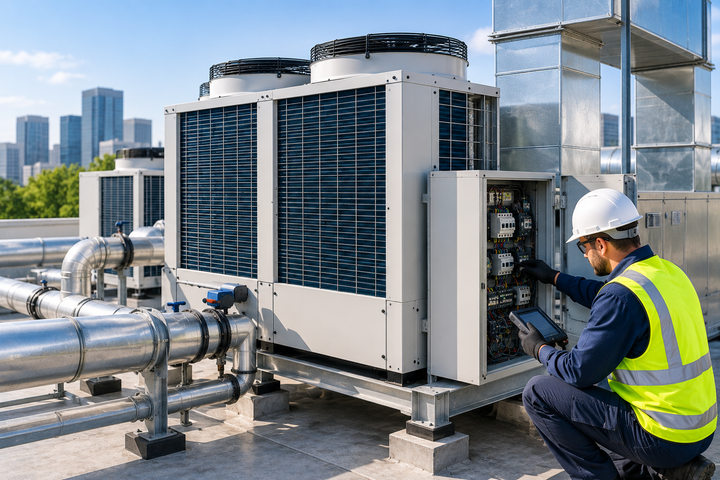
- Variable-speed compressors
- Smart thermostats
- Building automation platforms
- Occupancy sensors
- Advanced filtration systems
- Energy recovery ventilators
- Heat exchangers
- Predictive maintenance tools
- Intelligent monitoring systems
- Variable air volume controls
- IoT-enabled sensors
- Energy management systems
What Is Variable Refrigerant Flow (VRF)?
Variable Refrigerant Flow systems regulate refrigerant flow according to the cooling or heating needs of individual zones within a building.
These systems improve efficiency by delivering only the required amount of conditioning to each area rather than operating at full capacity continuously. Research has shown substantial energy savings potential compared with conventional cooling systems.
What Are Heat Pumps?
Heat pumps transfer heat rather than generating it directly. They can provide both heating and cooling functions while maintaining high energy efficiency.
Air Source Heat Pumps
These systems exchange heat with outdoor air and are commonly used in residential and commercial buildings.
Ground Source Heat Pumps
These systems utilize stable underground temperatures to improve efficiency and performance in various climates.
What Is Energy Recovery Ventilation?
Energy Recovery Ventilation systems capture energy from outgoing air and transfer it to incoming fresh air. This process reduces the energy required to condition outdoor air and improves overall system efficiency.
How Energy-Efficient HVAC Systems Work
- Sensors continuously monitor temperature, humidity, occupancy, and airflow.
- Control platforms analyze real-time building conditions.
- Variable-speed equipment adjusts output as needed.
- Ventilation systems optimize fresh air delivery.
- Energy recovery systems transfer thermal energy where possible.
- Automation platforms coordinate system operation.
- Performance data is analyzed to improve efficiency continuously.
Automation and Intelligent Control Systems
Modern HVAC systems increasingly rely on intelligent technologies.
Smart Thermostats
Smart thermostats automatically adjust temperature settings based on occupancy patterns and environmental conditions.
Building Automation Systems
Building automation platforms coordinate HVAC equipment and optimize building performance.
Advanced Sensors
Sensors provide continuous monitoring of temperature, humidity, air quality, and occupancy.
Predictive Maintenance
Analytics platforms identify potential equipment issues before major failures occur.
Artificial Intelligence Integration
AI technologies support energy forecasting, optimization, and operational decision-making.
Industry Applications
Residential Buildings
Homes utilize energy-efficient HVAC systems to improve comfort and reduce electricity consumption.
Commercial Buildings
Office buildings use advanced HVAC technologies to maintain comfortable working environments.
Healthcare Facilities
Hospitals require precise temperature control and high indoor air quality standards.
Educational Institutions
Schools and universities utilize HVAC technologies to improve learning environments.
Data Centers
Data centers depend on advanced cooling systems to protect critical equipment.
Industrial Facilities
Manufacturing environments require specialized HVAC solutions to manage process conditions.
Airports
Large transportation facilities use intelligent HVAC systems to manage extensive indoor spaces.
Smart Buildings
Modern smart buildings integrate HVAC technologies with automation and energy management systems.
Real-World Examples and Applications
Example: Corporate Office Building
A large office building uses VRF technology, occupancy sensors, and smart thermostats to optimize energy consumption throughout the day.
Example: Healthcare Facility
A hospital utilizes advanced filtration systems, energy recovery ventilation, and intelligent monitoring to maintain indoor air quality.
Example: Educational Campus
A university campus combines heat pumps, building automation systems, and energy management platforms to improve operational efficiency.
Maintenance Approaches
Preventive Maintenance
Regular inspections help maintain system performance and reliability.
Predictive Maintenance
Data-driven analysis identifies developing issues before significant disruptions occur.
Condition-Based Maintenance
Maintenance activities are performed according to actual equipment condition.
Reliability-Centered Maintenance
Critical HVAC assets receive focused maintenance attention based on operational importance.
Benefits and Advantages
Energy-efficient HVAC systems provide numerous advantages:
- Reduced energy consumption
- Improved indoor comfort
- Better humidity control
- Enhanced indoor air quality
- Improved equipment reliability
- Reduced environmental impact
- Enhanced operational efficiency
- Better temperature consistency
- Improved building performance
- Greater system flexibility
- Enhanced monitoring capabilities
- Support for smart building initiatives
Important Factors to Consider
When evaluating HVAC technologies, consider:
- Building size
- Climate conditions
- Occupancy patterns
- Indoor air quality requirements
- Energy management objectives
- Maintenance requirements
- Infrastructure compatibility
- Automation capabilities
- Long-term efficiency goals
- Scalability needs
Common Challenges and Solutions
| Challenge | Impact | Solution |
|---|---|---|
| Inefficient Equipment | Higher Energy Use | High-Efficiency Systems |
| Poor Airflow Management | Comfort Issues | Airflow Optimization |
| Limited Visibility | Operational Inefficiencies | Smart Monitoring |
| Equipment Failures | System Downtime | Predictive Maintenance |
| Excessive Ventilation Losses | Increased Energy Demand | Energy Recovery Ventilation |
HVAC Best Practices
- Maintain equipment regularly.
- Monitor system performance continuously.
- Utilize smart thermostats.
- Optimize ventilation settings.
- Improve building insulation.
- Analyze energy consumption trends.
- Use occupancy-based controls.
- Upgrade aging equipment when appropriate.
- Implement building automation platforms.
- Review performance metrics periodically.
Future Trends and Industry Insights
Several emerging technologies are shaping the future of HVAC systems.
Artificial Intelligence Optimization
AI-driven systems are improving operational efficiency through predictive analytics and intelligent control strategies.
Advanced Heat Pump Technologies
Heat pump technologies continue to evolve with improved performance and broader climate adaptability.
IoT-Connected HVAC Systems
Connected devices enable real-time monitoring and advanced operational insights.
Thermal Energy Storage
Thermal energy storage systems help manage peak demand and improve overall efficiency.
Smart Building Integration
HVAC systems are increasingly integrated with broader building management platforms.
Sustainable Building Design
Energy-efficient HVAC technologies are becoming central components of sustainable and low-carbon building strategies.
Expert Insights
Energy-efficient HVAC systems are evolving from standalone mechanical systems into intelligent building technologies. Advanced controls, smart sensors, automation platforms, heat pumps, energy recovery technologies, and predictive analytics are transforming how buildings manage indoor comfort and energy consumption.
As smart buildings become more common, HVAC technologies will continue to play a central role in improving efficiency, sustainability, occupant comfort, and operational performance.
Key Takeaways
- HVAC systems are major contributors to building energy consumption.
- Energy-efficient technologies improve comfort and performance.
- VRF systems and heat pumps enhance operational efficiency.
- Smart controls optimize system performance.
- Energy recovery ventilation improves energy utilization.
- Building automation enhances monitoring and management.
- Predictive maintenance improves reliability.
- Future HVAC systems will become increasingly intelligent and connected.
Frequently Asked Questions (FAQ)
What does HVAC stand for?
HVAC stands for Heating, Ventilation, and Air Conditioning.
What are energy-efficient HVAC systems?
They are HVAC technologies designed to reduce energy consumption while maintaining indoor comfort.
What is a VRF system?
A Variable Refrigerant Flow system adjusts refrigerant delivery according to building demand.
What is a heat pump?
A heat pump transfers heat between locations to provide heating and cooling efficiently.
What is Energy Recovery Ventilation?
It is a technology that transfers energy between outgoing and incoming air streams.
How do smart thermostats improve efficiency?
They automatically adjust settings based on occupancy and environmental conditions.
What role does automation play in HVAC systems?
Automation optimizes performance, monitoring, and operational control.
What is predictive maintenance?
Predictive maintenance uses data analysis to identify potential equipment issues early.
Are energy-efficient HVAC systems suitable for large buildings?
Yes, many technologies are specifically designed for commercial and institutional facilities.
What is a Building Automation System?
It is a platform that coordinates building systems, including HVAC operations.
Why is indoor air quality important?
Good indoor air quality supports occupant comfort, health, and productivity.
What is thermal energy storage?
It is a method of storing thermal energy for later use.
How do sensors improve HVAC performance?
Sensors provide real-time operational data that helps optimize system operation.
What industries use advanced HVAC technologies?
Healthcare, education, manufacturing, commercial real estate, transportation, and data centers.
What is the future of HVAC systems?
Future systems will increasingly utilize artificial intelligence, IoT connectivity, advanced automation, and smart building integration.
Conclusion
Energy-efficient HVAC systems are helping buildings achieve improved comfort, operational efficiency, and energy performance through advanced technologies and intelligent control strategies. Innovations such as heat pumps, VRF systems, energy recovery ventilation, predictive maintenance, and building automation are transforming how heating, cooling, and ventilation systems operate.
As smart building technologies continue to evolve, HVAC systems will become increasingly connected, data-driven, and adaptable. Understanding these technologies provides valuable insight into the future of energy management, indoor comfort, and sustainable building operation.