Exploring 5G Security: Cyber Infrastructure Solutions
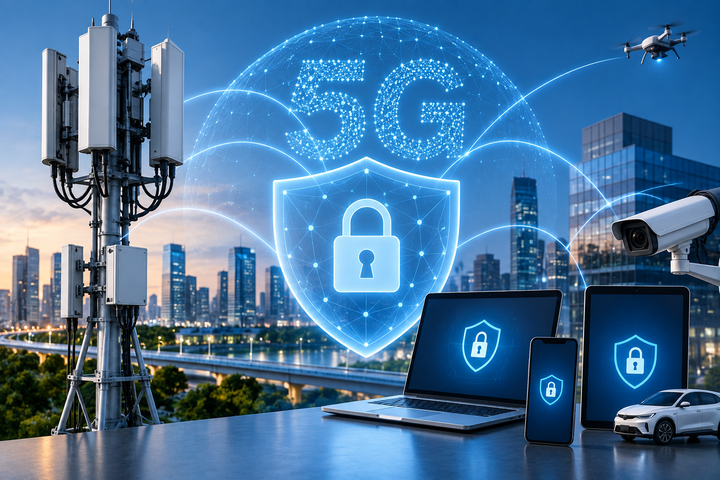
The arrival of 5G technology is transforming how people, devices, applications, and industries connect.
With higher speeds, lower latency, and support for billions of connected devices, 5G enables new possibilities across healthcare, manufacturing, transportation, smart cities, and industrial automation.
However, the expansion of connectivity also introduces new cybersecurity challenges. Modern 5G networks rely on cloud-native infrastructure, edge computing, network virtualization, and intelligent automation. While these technologies improve performance and flexibility, they also create additional areas that require protection.
Understanding 5G security and cyber infrastructure solutions is important for organizations seeking to protect data, maintain network integrity, and support secure digital transformation.
Quick Facts Table
| Topic | Purpose | Key Technologies | Main Benefits | Common Applications |
|---|---|---|---|---|
| 5G Security | Protect 5G networks, users, devices, and data | Encryption, Authentication, Network Slicing, Edge Security, AI Analytics, Zero Trust Security | Improved cybersecurity, stronger privacy, better resilience, enhanced visibility | Smart Cities, Healthcare, Manufacturing, Transportation, Cloud Platforms |
What Is 5G Security?
5G security refers to the technologies, processes, and architectural controls used to protect 5G networks, connected devices, applications, and data from cyber threats.
Unlike earlier mobile networks, 5G uses virtualized infrastructure, cloud computing, edge computing, and network slicing. Security controls must therefore protect multiple layers of the ecosystem, including devices, radio access networks, core networks, cloud infrastructure, and applications.
Why Is 5G Security Important?
As organizations connect more devices and critical operations through 5G networks, cybersecurity becomes increasingly important.
5G security helps:
- Protect sensitive information
- Prevent unauthorized access
- Improve network resilience
- Support secure digital transformation
- Protect connected devices
- Strengthen identity management
- Reduce cyber risk
- Improve operational reliability
5G Security Facts
- 5G networks support significantly greater device density than previous mobile generations.
- Edge computing is becoming a major component of modern 5G architecture.
- Network slicing enables multiple virtual networks on shared infrastructure.
- Artificial intelligence is increasingly used for threat detection and network monitoring.
- Zero Trust Security frameworks are becoming more important in connected environments.
- Cloud-native infrastructure is expanding within modern telecommunications networks.
Understanding the 5G Security Landscape
Traditional mobile networks relied heavily on centralized infrastructure. Modern 5G architecture distributes network functions across cloud environments, edge computing platforms, and virtualized systems.
This shift improves flexibility and performance but also creates new cybersecurity considerations. Organizations must secure users, devices, applications, cloud resources, communication channels, and operational technologies simultaneously.
Major Cyber Infrastructure Solutions in 5G
- Network Slicing Security
- Zero Trust Security
- Identity and Access Management
- Multi-Factor Authentication
- Edge Computing Security
- Cloud Security Platforms
- Artificial Intelligence Analytics
- Threat Intelligence Systems
- Encryption Technologies
- Security Information and Event Management Platforms
- Security Orchestration Technologies
- Network Monitoring Systems
- Behavioral Analytics
- Device Security Platforms
- Security Automation
Cyber Infrastructure Technologies Comparison
| Technology | Security Level | Complexity | Primary Purpose |
|---|---|---|---|
| Network Slicing Security | High | High | Traffic Isolation |
| Zero Trust Security | Very High | Medium | Access Protection |
| AI Threat Detection | High | Medium | Threat Identification |
| Edge Security | High | Medium | Distributed Protection |
| Multi-Factor Authentication | High | Low | Identity Verification |
| Encryption Technologies | High | Medium | Data Protection |
What Is Network Slicing Security?
Network slicing allows multiple virtual networks to operate on shared physical infrastructure. Each slice can be customized for specific requirements such as healthcare, industrial automation, or smart transportation.
Strong isolation between slices is essential to prevent unauthorized access and cross-slice attacks.
What Is Zero Trust Security?
Zero Trust Security assumes that no user, device, or application should be automatically trusted. Every access request must be continuously verified before permissions are granted.
This approach helps strengthen cybersecurity across distributed 5G environments.
What Is Edge Computing Security?
Edge computing moves processing and analytics closer to connected devices. Because data processing occurs outside centralized environments, organizations must secure edge infrastructure, applications, and communications.
What Is AI-Powered Threat Detection?
Artificial intelligence helps identify unusual patterns, suspicious behavior, and potential attacks more quickly than traditional monitoring approaches.
AI analytics can support continuous monitoring and faster incident response.
Key Features and Components
- Identity Management
- Access Management
- Network Segmentation
- Traffic Isolation
- Data Encryption
- Threat Detection
- Security Analytics
- Device Authentication
- Cloud Protection
- Edge Security
- Continuous Monitoring
- Incident Response Automation
5G Security Architecture
A simplified 5G security architecture follows this structure:
Connected Devices → Radio Access Network → Edge Computing → 5G Core Network → Cloud Infrastructure → Applications
Architecture Explanation
Every layer includes dedicated security controls. Devices require authentication, communications require encryption, network traffic requires monitoring, and cloud environments require continuous protection.
Security must operate across the entire ecosystem rather than focusing on a single network boundary.
Industry Applications
Healthcare
Protects connected medical devices and healthcare communications.
Manufacturing
Supports secure industrial automation and connected production systems.
Smart Cities
Protects intelligent transportation, public infrastructure, and connected services.
Financial Services
Supports secure mobile transactions and identity verification.
Transportation
Protects connected vehicles and intelligent traffic management systems.
Telecommunications
Secures network operations, subscribers, and infrastructure.
Energy Infrastructure
Protects smart grids and connected utility systems.
Education
Supports secure digital learning environments and connected campuses.
How 5G Security Works
- Users and devices request network access.
- Authentication systems verify identities.
- Access management policies evaluate permissions.
- Encryption protects data transmission.
- Network slicing separates traffic flows.
- AI monitoring platforms analyze activity.
- Security controls identify suspicious behavior.
- Automated systems respond to potential threats.
Benefits and Advantages
- Improved cybersecurity posture
- Better data protection
- Enhanced privacy controls
- Stronger identity management
- Increased network resilience
- Faster threat detection
- Improved visibility
- Better regulatory compliance
- Reduced operational risk
- Greater infrastructure protection
Real-World Examples
Example: Smart Hospital
A healthcare facility uses 5G-connected medical devices, biometric authentication, encrypted communications, and network slicing to protect patient information.
Example: Industrial Facility
A manufacturing plant uses private 5G networks, edge computing, and AI monitoring to support secure industrial automation.
Example: Smart Transportation
Connected transportation systems use secure communications, real-time analytics, and traffic isolation to support operational safety.
Common Challenges and Solutions
| Challenge | Impact | Solution |
|---|---|---|
| Unauthorized Access | Security Risk | Multi-Factor Authentication |
| Cross-Slice Threats | Data Exposure | Strong Slice Isolation |
| Device Vulnerabilities | Operational Risk | Device Authentication |
| Cloud Misconfiguration | Infrastructure Risk | Continuous Monitoring |
| Advanced Cyber Attacks | Network Disruption | AI Threat Detection |
5G Security Best Practices
- Enable multi-factor authentication.
- Apply Zero Trust Security principles.
- Encrypt sensitive communications.
- Monitor network activity continuously.
- Secure edge computing resources.
- Verify device identities regularly.
- Maintain updated security policies.
- Conduct security assessments periodically.
- Strengthen access management controls.
- Implement security automation where appropriate.
Future Trends and Industry Insights
AI-Driven Security Operations
Artificial intelligence will increasingly support automated threat detection and response.
Zero Trust Architecture Expansion
Organizations are adopting Zero Trust Security across more infrastructure layers.
Advanced Network Slicing Protection
Future solutions will strengthen isolation and policy management across network slices.
Cloud-Native Security
Cloud security technologies will become more integrated into telecommunications infrastructure.
Continuous Authentication
Authentication processes will become more dynamic and context-aware.
Behavioral Analytics
Advanced analytics will improve detection of unusual activity and emerging threats.
Edge Security Innovation
Security technologies will continue evolving to protect distributed edge environments.
Expert Insights
5G security is becoming a foundational element of modern digital infrastructure. As organizations expand the use of connected devices, cloud platforms, edge computing, and intelligent automation, cybersecurity strategies must evolve accordingly.
The combination of Zero Trust Security, network slicing protection, artificial intelligence analytics, identity management, and cloud-native security technologies is helping create more resilient and secure 5G ecosystems.
Key Takeaways
- 5G introduces new cybersecurity opportunities and challenges.
- Network slicing requires strong isolation controls.
- Zero Trust Security strengthens access protection.
- AI analytics improves threat detection.
- Edge computing requires dedicated security strategies.
- Encryption remains essential for data protection.
- Identity management plays a critical role in network security.
- Future 5G environments will become increasingly intelligent and automated.
Frequently Asked Questions (FAQ)
What is 5G security?
5G security refers to technologies and practices used to protect 5G networks, devices, applications, and data.
Why is 5G security important?
It helps protect information, devices, and infrastructure from cyber threats.
What is network slicing?
Network slicing creates multiple virtual networks within a shared physical infrastructure.
What is Zero Trust Security?
Zero Trust Security continuously verifies users and devices before granting access.
What is edge computing security?
It protects distributed computing resources located closer to connected devices.
How does AI improve 5G security?
AI helps identify threats, detect anomalies, and improve monitoring capabilities.
What is multi-factor authentication?
It requires multiple forms of identity verification before access is granted.
Why is encryption important in 5G?
Encryption helps protect data during transmission and storage.
What industries use 5G security solutions?
Healthcare, manufacturing, transportation, energy, education, telecommunications, and smart city infrastructure.
What is the future of 5G security?
Future developments include AI-driven security operations, advanced automation, Zero Trust frameworks, behavioral analytics, and stronger cloud security technologies.
Conclusion
5G technology is transforming digital connectivity while creating new cybersecurity requirements. Organizations must protect users, devices, applications, cloud environments, and network infrastructure across increasingly complex ecosystems.
Cyber infrastructure solutions such as network slicing security, Zero Trust Security, artificial intelligence analytics, identity management, encryption, and edge security help strengthen protection across modern 5G environments. As connected technologies continue to expand, robust security strategies will remain essential for supporting reliable and resilient digital infrastructure.