Fire alarm systems are integrated safety networks designed to detect early signs of fire—such as smoke, heat, or flame—and alert occupants so they can respond quickly. These systems exist to protect lives, property, and infrastructure by providing early warning before fire conditions escalate.
Before automated systems were developed, fire detection relied on manual observation, which often delayed response times. As urban environments expanded and buildings became larger and more complex, automatic fire detection became essential. Today, fire alarm systems form a critical part of building safety infrastructure, especially in residential complexes, commercial buildings, hospitals, industrial facilities, and educational institutions.
At their core, fire alarm systems monitor environmental changes and activate audible and visual alerts when potential hazards are detected.
Why Fire Alarm Systems Matter Today
Fire alarm systems are one of the most important life safety technologies in modern construction. Their role extends beyond simple detection.
Why they matter in today’s environment:
-
Early detection: Provides critical response time before fire spreads
-
Life safety protection: Helps occupants evacuate safely
-
Property protection: Minimizes structural damage through early alerts
-
Regulatory compliance: Required by building and fire safety codes
-
Insurance and risk management: Often mandated for risk mitigation
These systems affect building owners, facility managers, safety officers, architects, and residents. They help solve the problem of delayed fire response, which can significantly increase risk to both people and infrastructure.
With rising urban density and high-rise construction, automated fire alarm systems are more vital than ever.
Major Types of Fire Alarm Systems
Fire alarm systems are generally categorized based on wiring architecture and detection approach.
Conventional Fire Alarm Systems
Divide a building into zones. When triggered, they indicate the affected zone but not the exact device.
Addressable Fire Alarm Systems
Each detector has a unique address, allowing precise identification of the triggered device.
Wireless Fire Alarm Systems
Use radio frequency communication instead of hard wiring, useful for heritage buildings or complex retrofits.
Hybrid Systems
Combine wired and wireless technologies for flexible installation.
| System Type | Key Feature | Typical Application |
|---|---|---|
| Conventional | Zone-based alert | Small to mid-size buildings |
| Addressable | Device-specific identification | Large commercial facilities |
| Wireless | Cable-free communication | Renovation projects |
| Hybrid | Flexible configuration | Mixed-use complexes |
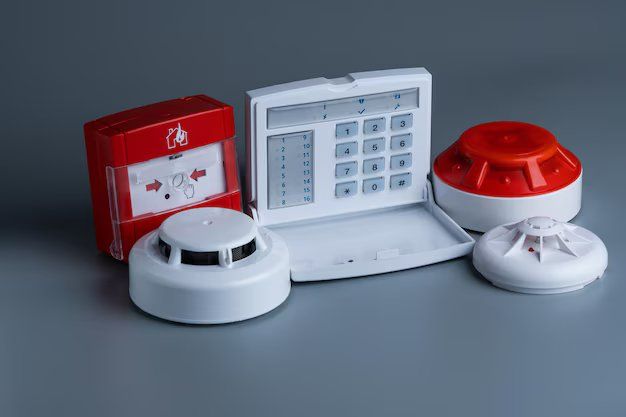
Core Components of a Fire Alarm System
Every fire alarm system consists of several essential components working together.
Fire Alarm Control Panel (FACP)
The central unit that receives signals from detectors and activates alarms.
Smoke Detectors
Detect airborne particles associated with combustion.
Heat Detectors
Respond to rapid temperature increases or fixed heat thresholds.
Manual Call Points
Allow occupants to manually trigger the alarm.
Alarm Notification Devices
Include sirens, horns, bells, and strobe lights.
Power Supply System
Includes primary power and backup battery systems to ensure operation during outages.
Each component plays a specific role in early warning and system coordination.
How Fire Alarm Systems Work
The basic operating principle follows a simple sequence:
-
A detector senses smoke, heat, or flame.
-
A signal is sent to the control panel.
-
The control panel verifies the signal.
-
Audible and visual alarms activate.
-
In some systems, automatic notifications are sent to monitoring centers.
Advanced systems may also trigger:
-
Automatic sprinkler activation
-
Elevator control
-
HVAC shutdown
-
Emergency lighting systems
This integration improves overall building safety.
Recent Developments and Industry Trends (2024–2025)
Fire alarm technology continues to evolve with improved reliability and integration.
| Year | Development | Impact |
|---|---|---|
| 2024 | Multi-sensor detection devices | Reduced false alarms |
| 2024 | Cloud-based monitoring dashboards | Remote status visibility |
| 2025 | Improved battery backup efficiency | Longer operational resilience |
| 2025 | Enhanced voice evacuation systems | Clearer emergency communication |
There is growing adoption of intelligent detection algorithms that distinguish between real fire events and environmental disturbances. Improved sensor calibration also helps reduce nuisance alarms, which is important for maintaining occupant trust in alarm systems.
Regulations, Standards, and Compliance Requirements
Fire alarm systems are regulated by national and international standards to ensure consistent safety performance.
Common regulatory frameworks include:
-
NFPA 72 (National Fire Alarm and Signaling Code) – United States
-
EN 54 Standards – European Union
-
ISO Fire Safety Guidelines
-
National Building Codes (varies by country)
-
Local Fire Department Requirements
In many countries, fire alarm systems must undergo periodic inspection and testing to maintain compliance. Buildings such as hospitals, hotels, schools, and high-rise structures often have stricter requirements.
Installation and Maintenance Insights
Proper installation and maintenance are critical for reliability.
Key installation considerations:
-
Detector placement based on ceiling height and airflow
-
Correct wiring and signal routing
-
Backup power configuration
-
Integration with other safety systems
Maintenance best practices:
-
Regular detector cleaning
-
Battery inspection
-
Functional testing of alarms
-
Panel diagnostics review
-
Documentation of inspection records
Routine maintenance ensures the system performs as intended during emergencies.
Essential Safety Insights for Building Owners and Occupants
-
Install detectors in sleeping areas and common spaces
-
Test alarms periodically according to guidelines
-
Avoid placing detectors near vents or cooking appliances
-
Ensure clear evacuation pathways
-
Train occupants on evacuation procedures
Awareness combined with reliable technology significantly improves safety outcomes.
Frequently Asked Questions
What is the difference between conventional and addressable systems?
Conventional systems identify zones, while addressable systems identify specific devices.
How often should fire alarm systems be tested?
Testing frequency depends on local regulations but typically includes periodic inspections and annual system checks.
Are fire alarms mandatory in commercial buildings?
Yes, most commercial buildings are required by building codes to have compliant fire alarm systems.
What causes false alarms?
Dust, steam, insects, or improper placement can trigger unnecessary alarms.
Do fire alarm systems work during power outages?
Yes, systems include backup batteries to ensure continued operation.
Conclusion
Fire alarm systems are a foundational element of building safety. By combining early detection, clear notification, and regulatory compliance, they protect lives and property in residential, commercial, and industrial environments. Modern systems continue to improve through enhanced detection accuracy, integration capabilities, and intelligent monitoring features.
Understanding the types, components, operational principles, and maintenance requirements of fire alarm systems empowers building owners, facility managers, and occupants to prioritize safety effectively. In an increasingly complex built environment, reliable fire detection remains one of the most critical protective measures available.