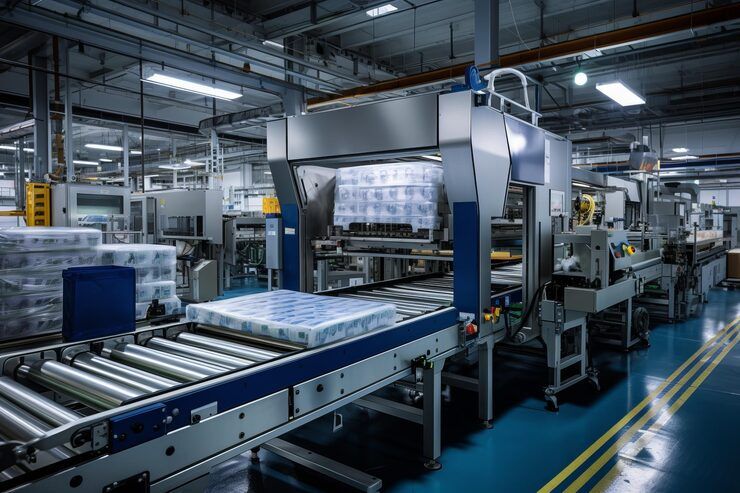
Automated packaging lines are integrated production systems designed to package products with minimal manual intervention. These lines combine conveyors, filling systems, sealing units, labeling machines, inspection devices, and palletizing systems into a coordinated workflow.
They exist because modern manufacturing requires high-speed, consistent, and traceable packaging processes. As product demand increased globally, manual packaging methods became inefficient, inconsistent, and difficult to scale. Automated lines emerged to handle higher production volumes while maintaining precision and product protection.
Today, automated packaging lines are used across industries such as food processing, pharmaceuticals, consumer goods, electronics, chemicals, and logistics distribution. They ensure products are securely packed, accurately labeled, and prepared for transport with reduced human error.
Importance: Why Automated Packaging Lines Matter Today
Automated packaging lines are central to modern industrial operations because packaging is the final step before distribution.
Why this topic matters today:
-
Production efficiency: High-speed operations reduce bottlenecks
-
Consistency: Automated systems maintain uniform packaging quality
-
Traceability: Integrated tracking supports regulatory compliance
-
Labor optimization: Reduces repetitive manual tasks
-
Product protection: Minimizes handling damage
These systems affect plant managers, operations engineers, logistics coordinators, quality control teams, and supply chain planners. They help solve challenges related to production delays, labeling errors, inconsistent sealing, and inefficient pallet handling.
As e-commerce and global distribution networks expand, the role of automated packaging lines has become even more significant.
Core Components of an Automated Packaging Line
Automated packaging lines consist of multiple interconnected modules.
Key components include:
-
Feeding systems: Deliver products to the packaging area
-
Conveyors: Transport items between stages
-
Filling or dosing units: Dispense controlled quantities (for liquids or powders)
-
Cartoning or wrapping machines: Enclose products securely
-
Sealing systems: Close packages with heat, pressure, or adhesives
-
Labeling units: Apply identification and tracking information
-
Inspection systems: Verify weight, seal integrity, and label accuracy
-
Palletizing systems: Stack packaged goods for shipment
| Stage | Primary Function | Impact on Workflow |
|---|---|---|
| Product feeding | Aligns and spaces products | Ensures smooth flow |
| Primary packaging | Encloses product | Protects item |
| Secondary packaging | Groups items | Improves handling |
| Inspection | Detects defects | Maintains quality |
| Palletizing | Prepares shipment | Streamlines logistics |
Each stage must operate in synchronization to maintain steady throughput.
Working Principles: How Automated Packaging Lines Operate
Automated packaging lines rely on coordinated motion, sensors, and programmable control systems.
Typical workflow explained:
-
Products enter the line via conveyors.
-
Sensors detect product position and spacing.
-
Filling or packaging modules operate in timed cycles.
-
Sealing and labeling units finalize the package.
-
Inspection systems verify weight, dimensions, and print accuracy.
-
Approved products move to palletizing and storage areas.
These lines operate through centralized control panels that coordinate speed, timing, and synchronization. Accurate timing prevents collisions, misalignment, and packaging errors.
Efficiency Insights and Performance Metrics
Efficiency in automated packaging lines is measured using operational indicators.
Common performance metrics include:
-
Throughput rate: Units processed per hour
-
Cycle time: Time taken to complete one packaging sequence
-
Downtime frequency: Interruptions due to maintenance or adjustments
-
Defect rate: Percentage of rejected packages
-
Energy consumption per unit: Operational efficiency indicator
Modern systems integrate real-time monitoring to optimize these metrics and reduce unnecessary stoppages.
Recent Developments and Industry Trends (2024–2025)
Over the past year, automated packaging lines have evolved through technological integration and sustainability improvements.
| Year | Trend | Industrial Impact |
|---|---|---|
| 2024 | Increased robotics integration | Greater flexibility in packaging formats |
| 2024 | Improved energy-efficient drives | Lower power usage |
| 2025 | Smart inspection systems | Enhanced quality detection |
| 2025 | Compact modular packaging units | Easier production line upgrades |
There is also a noticeable shift toward recyclable and lightweight packaging materials, requiring machines capable of adapting to new material properties without compromising seal integrity.
Laws, Regulations, and Compliance Considerations
Automated packaging lines operate under various safety and quality regulations.
Common regulatory frameworks include:
-
Food safety standards: For hygienic packaging environments
-
Pharmaceutical packaging guidelines: For accurate labeling and traceability
-
Industrial machinery safety standards: Cover guarding and emergency stops
-
Environmental compliance rules: Address waste management and emissions
-
Electrical safety codes: Ensure safe power integration
Compliance requires documented inspection routines, controlled workflows, and traceable packaging records.
Maintenance and Operational Best Practices
Proper maintenance ensures long-term performance and efficiency.
Preventive maintenance practices include:
-
Regular inspection of conveyor belts and rollers
-
Calibration of filling and sealing units
-
Cleaning to prevent debris buildup
-
Verification of sensor alignment
-
Lubrication of moving components
Operational optimization tips:
-
Maintain consistent product spacing
-
Monitor temperature and humidity for sensitive materials
-
Use standardized inspection routines
-
Train operators in troubleshooting procedures
Well-maintained lines reduce downtime and maintain consistent output quality.
Tools and Learning Resources
Understanding automated packaging lines is supported by educational and technical references.
Helpful resources include:
-
Industrial automation textbooks
-
Manufacturing workflow manuals
-
Packaging engineering journals
-
Machinery safety guides
-
Production efficiency benchmarking reports
Reference tools often used in facilities:
-
Line balancing worksheets
-
Preventive maintenance schedules
-
Throughput calculation charts
-
Quality inspection templates
These tools assist professionals in analyzing and improving packaging performance.
Frequently Asked Questions
What industries use automated packaging lines?
Food processing, pharmaceuticals, electronics, cosmetics, consumer goods, and logistics distribution.
How do automated packaging lines improve efficiency?
They reduce manual handling, synchronize processes, and maintain consistent cycle times.
Can packaging lines adapt to different product sizes?
Yes. Modular designs allow adjustments for various packaging formats.
Why is inspection integrated into packaging lines?
To detect defects early and prevent distribution of incorrectly packaged products.
What role do sensors play in packaging lines?
Sensors monitor position, speed, weight, and alignment to maintain synchronized operation.
Conclusion
Automated packaging lines are essential to modern manufacturing and distribution systems. By integrating conveyors, packaging modules, inspection systems, and palletizing units into a synchronized workflow, they deliver speed, consistency, and traceability.
As industries continue to demand higher efficiency and sustainability, automated packaging technology evolves with improved robotics, smarter monitoring systems, and adaptable modular designs. Understanding their technology, workflow structure, and efficiency metrics provides valuable insight into one of the most important stages of industrial production.