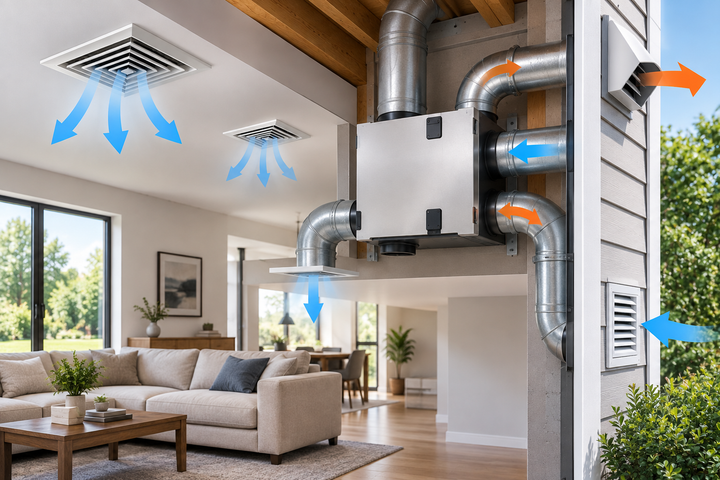
Home Ventilation Systems: Essential Technologies Overview
Home ventilation systems play an important role in maintaining indoor air quality, comfort, and moisture control.
While heating and cooling equipment regulates temperature, ventilation focuses on the continuous movement and exchange of indoor and outdoor air.
Modern homes are often designed to be more energy efficient and tightly sealed. As a result, fresh air may not naturally enter the building as easily as it once did. Home ventilation systems help remove stale air, excess humidity, odors, and airborne contaminants while introducing cleaner outdoor air into living spaces. Proper ventilation supports a healthier and more comfortable indoor environment.
Quick Facts Table
| Topic | Purpose | Key Components | Main Benefits | Common Applications |
|---|---|---|---|---|
| Home Ventilation Systems | Exchange indoor and outdoor air | Fans, ducts, vents, filters, controls, air recovery units | Improved indoor air quality, moisture control, better airflow | Houses, apartments, villas, smart homes, residential buildings |
What Is a Home Ventilation System?
A home ventilation system is a system designed to remove stale indoor air and introduce fresh outdoor air into a home. Ventilation can occur naturally through windows and openings or mechanically through fans, ducts, and air-handling equipment.
The primary goal is to maintain healthy airflow throughout the home while reducing moisture buildup, odors, and indoor pollutants.
Why Are Home Ventilation Systems Important?
Indoor air can contain moisture, dust, cooking byproducts, odors, and other contaminants. Without adequate ventilation, these elements can accumulate over time.
Proper ventilation helps:
- Improve indoor air quality
- Control humidity levels
- Reduce condensation
- Minimize mold growth risks
- Remove stale air
- Improve airflow circulation
- Support indoor comfort
- Maintain a healthier living environment
Ventilation is particularly important in kitchens, bathrooms, bedrooms, and tightly sealed modern homes.
Home Ventilation Facts
- Indoor environments can accumulate moisture and pollutants without adequate air exchange.
- Modern energy-efficient homes often require planned ventilation strategies.
- Whole-house ventilation systems provide controlled airflow throughout a residence.
- Energy recovery technologies can improve ventilation efficiency.
- Smart ventilation controls are becoming increasingly common in residential buildings.
Understanding the Concept
Ventilation is the process of exchanging indoor air with outdoor air. This exchange helps remove unwanted indoor contaminants while bringing in fresh air.
A well-designed ventilation strategy balances incoming and outgoing airflow. Too little ventilation may result in stale air and humidity problems, while poorly managed airflow can reduce overall efficiency. Modern systems are designed to provide consistent and controlled ventilation throughout the home.
Equipment Categories Table
| Equipment Category | Examples |
|---|---|
| Air Movement Equipment | Exhaust Fans, Inline Fans |
| Air Distribution Systems | Ducts, Vents, Grilles |
| Air Intake Components | Fresh Air Intakes, Louvers |
| Air Recovery Equipment | HRV Units, ERV Units |
| Filtration Components | Air Filters, Filter Media |
| Control Systems | Smart Controllers, Sensors |
| Monitoring Equipment | Air Quality Sensors, Humidity Sensors |
Key Features and Core Components
Modern home ventilation systems typically include:
- Exhaust fans
- Supply fans
- Air ducts
- Ventilation grilles
- Air filters
- Fresh air intakes
- Humidity sensors
- Smart controls
- Heat recovery units
- Energy recovery units
- Air quality monitoring devices
- Automated ventilation controls
These components work together to maintain balanced airflow and improve indoor environmental conditions.
Main Types of Home Ventilation Systems
Natural Ventilation
Natural ventilation relies on windows, doors, vents, and other openings to allow airflow through the home.
This approach can be effective when outdoor conditions are favorable and building design supports cross-ventilation.
Exhaust Ventilation Systems
Exhaust ventilation systems remove indoor air using fans.
They are commonly installed in bathrooms, kitchens, utility rooms, and other areas where moisture and odors are generated.
Supply Ventilation Systems
Supply ventilation systems introduce fresh outdoor air into the home through mechanical fans.
These systems provide greater control over incoming air and help maintain a consistent flow of outdoor air.
Balanced Ventilation Systems
Balanced systems simultaneously supply fresh air and remove stale indoor air.
This approach provides more controlled ventilation throughout the home and supports consistent indoor air quality.
Energy Recovery Ventilation Systems
Energy Recovery Ventilators (ERVs) and Heat Recovery Ventilators (HRVs) exchange indoor and outdoor air while transferring heat or moisture between airflow streams.
These systems help improve ventilation efficiency while maintaining indoor comfort.
Home Ventilation Systems Comparison Table
| Ventilation Type | Airflow Control | Energy Efficiency | Common Application |
|---|---|---|---|
| Natural Ventilation | Low | Medium | Homes with good airflow design |
| Exhaust Ventilation | Medium | Medium | Bathrooms and kitchens |
| Supply Ventilation | Medium | Medium | Fresh air intake applications |
| Balanced Ventilation | High | High | Whole-house ventilation |
| HRV Systems | High | High | Cooler climates |
| ERV Systems | High | High | Mixed and humid climates |
How Home Ventilation Systems Work
- Fresh outdoor air enters the ventilation system.
- Air passes through filtration components when applicable.
- Fans distribute fresh air throughout the home.
- Indoor air circulates through living spaces.
- Moisture, odors, and contaminants are collected through exhaust points.
- Exhaust fans remove stale air from the building.
- Airflow controls maintain balanced ventilation levels.
This process helps maintain consistent indoor air quality and airflow management.
Benefits and Advantages
Home ventilation systems provide numerous advantages:
- Better indoor air quality
- Improved moisture control
- Reduced condensation
- Enhanced airflow circulation
- Better humidity management
- Reduced indoor pollutant buildup
- Improved indoor comfort
- Support for healthier living conditions
- More consistent air distribution
- Improved freshness throughout the home
Industry Applications
Home ventilation technologies are commonly used in:
- Residential homes
- Apartments
- Smart homes
- Villas
- Multi-family housing
- Energy-efficient buildings
- Green building projects
- Home renovation projects
- High-performance residential construction
- Sustainable housing developments
Real-World Examples and Applications
Example: Bathroom Ventilation
A bathroom exhaust fan removes moisture generated during showers and helps reduce condensation on walls and mirrors.
Example: Kitchen Ventilation
Kitchen ventilation systems remove cooking odors, moisture, and airborne particles produced during food preparation.
Example: Whole-House Ventilation
A modern home uses a balanced ventilation system to continuously exchange indoor and outdoor air while maintaining comfortable indoor conditions.
Important Factors to Consider
When evaluating home ventilation systems, consider:
- Home size
- Climate conditions
- Airflow requirements
- Indoor humidity levels
- Building design
- Energy efficiency goals
- Ventilation strategy
- Maintenance requirements
- Filter replacement schedules
- Indoor air quality objectives
Common Challenges and Easy Solutions
| Challenge | Impact | Solution |
|---|---|---|
| Poor Airflow | Stale Indoor Air | Balanced Ventilation |
| Excess Humidity | Condensation | Exhaust Ventilation |
| Uneven Air Distribution | Comfort Issues | Proper Duct Design |
| Indoor Pollutants | Reduced Air Quality | Air Filtration |
| Moisture Buildup | Mold Risk | Continuous Ventilation |
Home Ventilation Best Practices
- Maintain clear airflow pathways.
- Clean vents regularly.
- Replace filters as recommended.
- Monitor indoor humidity levels.
- Utilize exhaust ventilation in moisture-prone areas.
- Inspect duct systems periodically.
- Maintain balanced airflow where possible.
- Use air quality monitoring devices when appropriate.
- Ensure adequate ventilation in kitchens and bathrooms.
- Follow building ventilation guidelines.
Future Trends and Industry Insights
Home ventilation technology continues to evolve with advances in automation and intelligent building systems.
Smart Ventilation Controls
Connected sensors can automatically adjust airflow based on occupancy and indoor air conditions.
Indoor Air Quality Monitoring
Advanced monitoring technologies provide real-time visibility into air quality conditions.
Energy Recovery Technologies
HRV and ERV technologies continue to improve ventilation efficiency and comfort.
Artificial Intelligence Integration
AI-powered platforms can optimize ventilation performance based on changing environmental conditions.
Smart Home Integration
Ventilation systems are increasingly being connected with broader smart home ecosystems.
Expert Insights
Home ventilation systems are becoming an essential part of modern residential design. As homes become more energy efficient and airtight, controlled ventilation helps maintain indoor air quality, comfort, and moisture balance.
Future residential buildings are expected to incorporate more intelligent ventilation technologies, advanced monitoring capabilities, and automated airflow management systems that improve both efficiency and occupant comfort.
Key Takeaways
- Home ventilation systems exchange stale indoor air with fresh outdoor air.
- Proper ventilation improves indoor air quality and comfort.
- Natural, exhaust, supply, balanced, HRV, and ERV systems are common options.
- Ventilation helps manage humidity and moisture.
- Whole-house systems provide controlled airflow throughout a residence.
- Smart technologies are transforming modern ventilation systems.
- Balanced airflow contributes to healthier indoor environments.
- Energy recovery technologies improve ventilation efficiency.
Frequently Asked Questions (FAQ)
What is a home ventilation system?
A home ventilation system exchanges indoor and outdoor air to improve airflow and indoor air quality.
Why is ventilation important in a home?
Ventilation helps remove moisture, odors, and indoor pollutants while introducing fresh air.
What are the main types of ventilation systems?
Common types include natural, exhaust, supply, balanced, HRV, and ERV systems.
What is an ERV system?
An Energy Recovery Ventilator transfers energy between incoming and outgoing air streams while providing ventilation.
What is an HRV system?
A Heat Recovery Ventilator recovers heat from outgoing air and transfers it to incoming air.
How does exhaust ventilation work?
Exhaust ventilation uses fans to remove indoor air from specific areas or the entire home.
What is balanced ventilation?
Balanced ventilation introduces fresh air while removing an equal amount of stale air.
Can ventilation help reduce humidity?
Yes. Proper ventilation helps remove excess moisture and improve humidity control.
What rooms need ventilation the most?
Bathrooms, kitchens, laundry areas, and bedrooms often require dedicated ventilation.
Are smart ventilation systems becoming common?
Yes. Smart controls and sensors are increasingly used in modern residential ventilation systems.
What is whole-house ventilation?
Whole-house ventilation provides continuous and controlled airflow throughout an entire home.
How often should ventilation systems be maintained?
Maintenance schedules vary, but regular inspection, cleaning, and filter replacement are generally recommended.
What is indoor air quality?
Indoor air quality refers to the condition of air inside a building, including pollutant levels, humidity, and airflow.
Can ventilation improve comfort?
Yes. Proper airflow management contributes to a more comfortable indoor environment.
What is the future of home ventilation systems?
Future systems are expected to feature advanced automation, AI integration, smart sensors, and improved energy recovery technologies.
Conclusion
Home ventilation systems play a vital role in maintaining indoor air quality, airflow, and moisture control. From simple exhaust fans to advanced balanced ventilation systems with energy recovery technologies, these solutions help create healthier and more comfortable living environments.
As residential buildings continue to adopt smart technologies and energy-efficient designs, ventilation systems are becoming more intelligent, efficient, and responsive. Understanding how these systems work helps homeowners make informed decisions about airflow management and indoor environmental quality.