Microturbines are compact combustion-based power generation systems designed to produce electricity on-site at commercial, industrial, or institutional facilities. Typically ranging from about 30 kW to several hundred kilowatts, they are smaller than conventional gas turbines and are often used in distributed energy generation.
They exist because centralized power plants do not always deliver optimal efficiency for every location. Transmission losses, grid instability, and rising energy demand have encouraged localized power solutions. Microturbines address these challenges by generating electricity close to the point of use, reducing transmission losses and improving reliability.
A defining feature of many microturbine systems is their compatibility with Combined Heat and Power (CHP) applications. Instead of wasting exhaust heat, CHP systems capture it for heating, hot water, or industrial processes, significantly improving overall energy utilization.
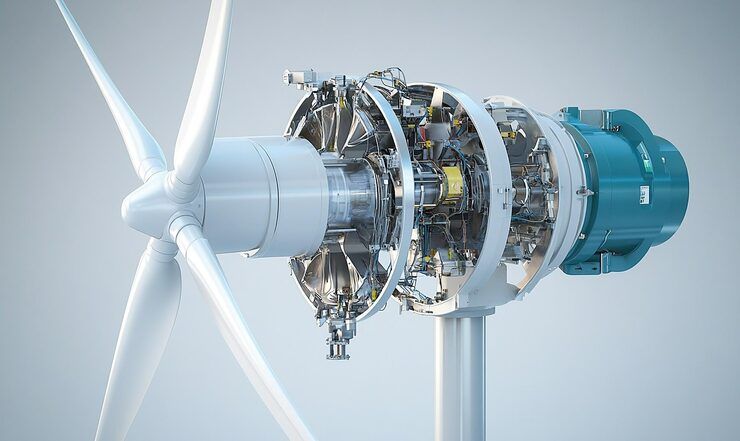
How Microturbines Work
Microturbines operate using a simplified gas turbine cycle.
Basic working steps:
-
Air is drawn into the compressor.
-
The compressed air mixes with fuel (commonly natural gas or biogas).
-
Combustion occurs in a controlled chamber.
-
Expanding gases spin a turbine connected to a generator.
-
Electricity is produced.
-
Exhaust heat is recovered in CHP applications.
Unlike larger turbines, microturbines often use air bearings instead of oil-lubricated systems, reducing maintenance complexity. Many designs include a recuperator, which captures exhaust heat to preheat incoming air, improving fuel efficiency.
Combined Heat and Power (CHP) Explained
Combined Heat and Power systems integrate electricity generation and thermal energy recovery into one process.
In traditional power plants, a large portion of energy is lost as waste heat. In contrast, CHP systems recover this thermal energy for useful applications such as:
-
Space heating
-
Water heating
-
Absorption cooling systems
-
Industrial drying processes
-
Steam generation
| Energy Path | Traditional Generation | CHP Microturbine System |
|---|---|---|
| Electricity | Delivered via grid | Generated on-site |
| Heat | Mostly wasted | Captured and reused |
| Overall Efficiency | 35–45% typical | 70–85% possible |
By using both electrical and thermal outputs, microturbine CHP systems significantly increase total system efficiency.
Why Microturbines Matter Today
Microturbines are increasingly relevant due to global focus on energy efficiency, resilience, and emissions reduction.
Key benefits include:
-
High overall efficiency through heat recovery
-
Reduced transmission losses with on-site generation
-
Lower emissions compared to older combustion systems
-
Fuel flexibility, including renewable gas options
-
Compact footprint suitable for urban or industrial sites
They are widely used in hospitals, universities, data centers, wastewater treatment plants, commercial buildings, and manufacturing facilities.
Microturbines help solve challenges such as unreliable grid supply, high heating demand, and energy cost volatility by integrating power and thermal energy production.
Recent Developments (2024–2025)
The microturbine sector has seen several advancements in the past year.
| Year | Trend | Impact |
|---|---|---|
| 2024 | Improved recuperator designs | Higher fuel efficiency |
| 2024 | Expanded biogas compatibility | Greater sustainability |
| 2025 | Integration with microgrids | Enhanced grid resilience |
| 2025 | Digital performance monitoring | Better predictive maintenance |
There is also growing interest in pairing microturbines with renewable systems, such as solar arrays, to form hybrid distributed energy solutions. These combinations support energy stability while maintaining low emission profiles.
Regulations and Policy Influence
Microturbines operate within energy and environmental regulatory frameworks.
Common regulatory considerations include:
-
National emission standards limiting nitrogen oxides (NOx) and carbon output
-
Energy efficiency incentives supporting CHP adoption
-
Building energy codes encouraging high-efficiency systems
-
Grid interconnection standards governing distributed generation
In many regions, governments promote CHP systems as part of energy transition strategies. Incentive programs often encourage high-efficiency distributed generation technologies to reduce overall carbon intensity.
Energy Efficiency Insights
Energy efficiency is the primary advantage of microturbine CHP systems.
Key efficiency considerations include:
-
Electrical efficiency: Percentage of fuel energy converted into electricity
-
Thermal recovery efficiency: Portion of waste heat captured
-
Overall system efficiency: Combined electrical and thermal performance
-
Load matching: Operating near optimal capacity improves efficiency
Microturbines perform best in facilities with steady heating demands. When thermal energy is consistently used, the system achieves maximum efficiency benefits.
Tools and Learning Resources
Understanding microturbine systems is supported by technical and educational resources.
Helpful resources include:
-
Energy engineering textbooks on distributed generation
-
CHP system design guides
-
Government energy efficiency publications
-
Utility interconnection guidelines
-
Microgrid planning manuals
Practical evaluation tools:
-
CHP feasibility assessment worksheets
-
Energy load calculation charts
-
Thermal demand analysis templates
-
Emissions comparison tables
These resources help organizations evaluate suitability and performance expectations.
Frequently Asked Questions
What fuels can microturbines use?
Most operate on natural gas, but some models support biogas, landfill gas, or other gaseous fuels.
Are microturbines suitable for small facilities?
Yes, especially when there is consistent heating demand alongside electricity needs.
How do microturbines differ from diesel generators?
Microturbines are designed for continuous operation with heat recovery, while diesel units are often used for backup power.
Do microturbines reduce emissions?
They typically produce lower nitrogen oxide emissions compared to traditional combustion systems.
Can microturbines operate independently from the grid?
Yes, they can function in grid-connected or standalone configurations depending on system design.
Conclusion
Microturbines represent a practical solution for high-efficiency distributed energy generation. By combining electricity production with heat recovery through CHP systems, they maximize fuel utilization and reduce waste. Their compact design, lower emissions, and adaptability to various fuels make them an important component of modern energy infrastructure.
As energy systems continue evolving toward resilience and efficiency, microturbines are likely to remain a key technology in commercial and industrial power generation strategies.