An alternator is an electromechanical device that converts mechanical energy into electrical energy in the form of alternating current (AC). It plays a central role in automotive charging systems, industrial generators, marine engines, and backup power equipment.
In vehicles, the alternator powers electrical systems while the engine is running and maintains battery charge. Without a properly functioning alternator, components such as lighting, ignition systems, electronic control modules, and safety features cannot operate reliably.
Alternators exist because batteries alone cannot supply sustained electrical power during engine operation. Instead, the alternator continuously generates electricity, ensuring stable voltage and uninterrupted system performance.
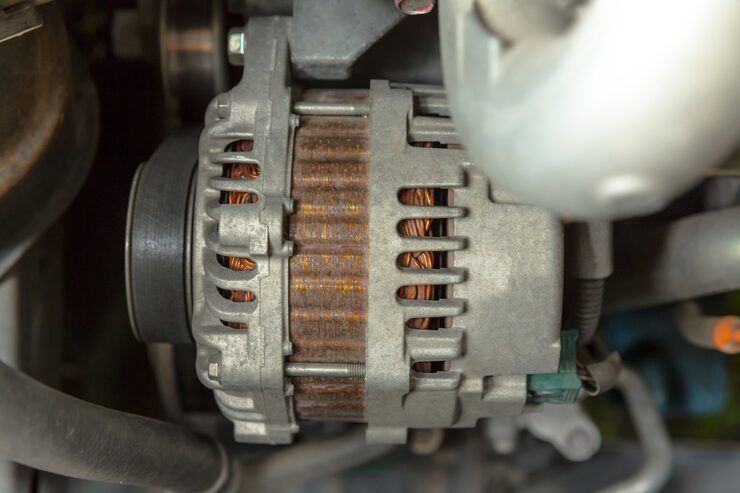
Working Principle of an Alternator
Alternators operate on the principle of electromagnetic induction, discovered by Michael Faraday. When a conductor moves within a magnetic field, it generates an electric current.
The basic process works as follows:
-
The engine rotates a pulley connected to the alternator.
-
The pulley spins the rotor, creating a rotating magnetic field.
-
This magnetic field interacts with stationary windings in the stator.
-
The movement induces alternating current (AC) in the stator windings.
-
A rectifier converts AC into direct current (DC) for vehicle use.
-
A voltage regulator maintains stable output voltage.
This process ensures continuous energy production while the engine runs.
Main Components of an Alternator
Understanding alternator operation requires knowledge of its core components.
| Component | Function |
|---|---|
| Rotor | Generates rotating magnetic field |
| Stator | Produces electrical current through induction |
| Rectifier (Diode Assembly) | Converts AC to DC |
| Voltage Regulator | Controls output voltage |
| Slip Rings & Brushes | Transfer current to the rotor |
| Pulley & Belt | Connect alternator to engine rotation |
Each component must function precisely to ensure stable power output and long-term reliability.
Energy Conversion Explained
Alternators convert energy in three stages:
Mechanical Energy → Magnetic Energy → Electrical Energy
-
The engine provides rotational mechanical energy.
-
The spinning rotor produces a changing magnetic field.
-
The stator windings convert this magnetic motion into electrical current.
The efficiency of this conversion depends on:
-
Rotor speed
-
Magnetic field strength
-
Winding design
-
Internal resistance
Modern alternators are engineered for high efficiency, minimizing energy loss through heat and friction.
Voltage Regulation: Why It Is Essential
Voltage regulation is one of the most critical functions of an alternator. Automotive electrical systems typically operate around 12 to 14.5 volts in standard vehicles.
Without regulation:
-
Overvoltage can damage electronic components.
-
Undervoltage can lead to weak battery charging.
-
Fluctuating voltage may affect engine control modules.
The voltage regulator automatically adjusts current supplied to the rotor. If system voltage drops, it increases field current to boost output. If voltage rises too high, it reduces field current to stabilize levels.
This dynamic control ensures:
-
Battery longevity
-
Stable lighting performance
-
Reliable electronic operation
Alternator and Battery Integration
The alternator and battery work together as a coordinated charging system.
Battery Role:
-
Starts the engine
-
Supplies power when engine is off
-
Acts as voltage stabilizer
Alternator Role:
-
Recharges battery during operation
-
Powers vehicle systems
-
Maintains electrical balance
Once the engine starts, the alternator becomes the primary power source, reducing reliance on the battery.
Types of Alternators
Alternators vary depending on application.
Common types include:
-
Automotive alternators
-
Heavy-duty industrial alternators
-
Marine alternators
-
Brushless alternators
-
High-output alternators for specialized systems
Brushless designs reduce mechanical wear, improving reliability and efficiency in demanding environments.
Recent Developments in Alternator Technology (2024–2025)
Recent trends focus on efficiency and integration with modern electrical systems.
| Year | Development | Impact |
|---|---|---|
| 2024 | Smart voltage control modules | Improved fuel efficiency |
| 2024 | Enhanced cooling systems | Better durability |
| 2025 | High-efficiency diode assemblies | Reduced heat loss |
| 2025 | Integrated energy management systems | Optimized load balancing |
Modern vehicles increasingly use intelligent charging systems that adjust output based on battery condition and electrical demand.
System Integration in Modern Vehicles
Alternators now integrate with advanced vehicle systems such as:
-
Electronic stability control
-
Advanced driver assistance systems
-
Infotainment modules
-
Hybrid energy systems
In hybrid vehicles, alternator functionality may be integrated into starter-generator units that combine starting and charging roles.
Industrial alternators integrate with:
-
Backup power systems
-
Renewable energy interfaces
-
Heavy machinery power circuits
Common Signs of Alternator Issues
Understanding symptoms improves diagnostic awareness.
-
Dimming headlights
-
Battery warning light
-
Electrical malfunctions
-
Unusual noise from engine area
-
Slow battery charging
Routine inspection and electrical testing help maintain system reliability.
Maintenance and Operational Tips
To maintain alternator performance:
-
Inspect drive belts regularly
-
Ensure clean electrical connections
-
Monitor battery condition
-
Check for unusual sounds
-
Avoid excessive electrical overload
Proper system care extends alternator lifespan and supports stable vehicle operation.
Frequently Asked Questions
What is the difference between a generator and an alternator?
Generators can produce direct current directly, while alternators produce alternating current that is later converted to direct current.
How long do alternators typically last?
Service life depends on operating conditions, usage, and maintenance quality.
Can a vehicle run without an alternator?
Only temporarily, using battery power alone. Long-term operation requires a functioning alternator.
Why does voltage fluctuate at idle?
Lower engine speed reduces rotor speed, slightly affecting output, though regulation minimizes variation.
Do alternators improve fuel efficiency?
Modern smart charging systems can reduce engine load, contributing to improved efficiency.
Conclusion
Alternators are essential components in automotive and industrial power systems. By converting mechanical motion into regulated electrical energy, they ensure continuous operation of modern electrical systems. Voltage regulation, energy conversion efficiency, and system integration are key to maintaining performance and reliability.
As vehicles and industrial machinery become more electronically advanced, alternator technology continues evolving toward smarter control, improved efficiency, and better durability. Understanding how alternators work provides valuable insight into one of the most important components of modern energy systems.