Vibrating Conveyors: Complete Guide to Material Handling Systems and Industrial Applications
Vibrating conveyors are widely used in modern industries to move bulk materials efficiently and consistently.
They play an important role in manufacturing, mining, food processing, recycling, chemical production, and many other industrial sectors. Instead of relying on belts or rollers, these conveyors use controlled vibrations to transport materials from one location to another.
As production facilities continue to increase automation, vibrating conveyor systems have become an essential part of industrial material handling. They are valued for their ability to handle different types of materials while maintaining steady product flow and reducing manual handling.
This guide explains how vibrating conveyors work, their different types, major components, industrial applications, benefits, and future developments in simple and practical language.
Understanding the Concept
A vibrating conveyor is an industrial material handling system that moves products using carefully controlled mechanical vibrations. Rather than pulling materials with a moving belt, the conveyor tray vibrates at a specific frequency, causing materials to move gradually along the conveying surface.
These systems are suitable for transporting many kinds of bulk materials, including powders, granules, packaged products, metal components, agricultural products, minerals, and recycled materials.
Industrial vibrating conveyors are commonly integrated into automated production lines where continuous and reliable material movement is required.
Key Types or Categories
Different industries require different vibrating conveyor designs depending on the materials being transported.
Linear Vibrating Conveyors
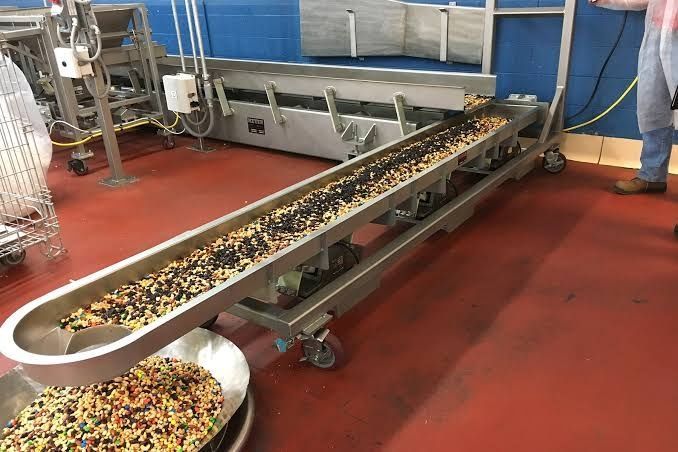
Linear vibrating conveyors move materials in a straight path.
They are commonly used for:
- Food processing
- Packaging lines
- Assembly operations
- Bulk material transport
Their simple design supports reliable continuous operation.
Tubular Vibrating Conveyors
Tubular conveyors transport materials inside enclosed tubes.
They are suitable for:
- Fine powders
- Chemical materials
- Pharmaceutical products
- Dust-sensitive materials
The enclosed design helps reduce material loss and contamination.
Heavy-Duty Vibrating Conveyors
Heavy-duty models are designed for demanding industrial environments.
Typical applications include:
- Mining
- Foundries
- Steel manufacturing
- Aggregate processing
- Cement production
These conveyors handle heavy loads and abrasive materials.
Electromagnetic Vibrating Conveyors
Electromagnetic systems generate vibration using electromagnetic drives.
Advantages include:
- Precise vibration control
- Quiet operation
- Smooth material flow
- Low maintenance requirements
They are often used where accurate feeding is important.
Mechanical Vibrating Conveyors
Mechanical vibrating conveyors use motors and eccentric drive systems to generate controlled vibration.
These systems are commonly found in large industrial facilities because of their durability and continuous operating capability.
Important Subsections
Conveyor Trough
The trough is the surface that carries materials.
Depending on the application, it may be constructed from:
- Stainless steel
- Carbon steel
- Aluminum
- Wear-resistant alloys
Material selection depends on operating conditions.
Vibration Drive System
The drive system generates the vibration required to move materials.
Common drive technologies include:
- Electric motors
- Electromagnetic drives
- Eccentric shafts
- Unbalanced motors
Each drive provides different levels of vibration control.
Suspension System
Springs or flexible supports absorb vibration while allowing controlled movement of the conveyor.
This improves operating stability and extends equipment life.
Control System
Modern conveyor systems include automated controls that regulate:
- Vibration frequency
- Material flow rate
- Operating speed
- Production synchronization
Automation improves production efficiency and consistency.
How It Works
Vibrating conveyors operate through a straightforward sequence.
Step 1: Material Loading
Bulk material enters the conveyor through a hopper, feeder, or production equipment.
Examples include:
- Powder
- Grain
- Metal parts
- Plastic pellets
- Food ingredients
Step 2: Vibration Generation
The drive system produces controlled vibrations at a predetermined frequency.
These vibrations create small forward movements along the conveyor tray.
Step 3: Material Transportation
Each vibration cycle gently moves the material forward.
Continuous vibration creates a smooth and consistent flow throughout the production process.
Step 4: Flow Control
Operators adjust vibration intensity to match production requirements.
This allows accurate handling of different material types and production capacities.
Step 5: Material Discharge
The transported material reaches the discharge point where it moves to:
- Processing equipment
- Packaging systems
- Storage bins
- Screening machines
- Mixing equipment
The process then repeats continuously.
Benefits and Advantages
Vibrating conveyors provide numerous operational advantages across industrial environments.
Efficient Material Handling
Controlled vibration enables steady movement of bulk materials with minimal interruption.
Reduced Product Damage
Gentle conveying action minimizes impact, making these conveyors suitable for delicate products such as food items and fragile components.
Low Maintenance
With relatively few moving parts compared to belt conveyor systems, maintenance requirements are often reduced.
Energy Efficiency
Modern vibration drive systems are designed to deliver efficient material transport while optimizing energy consumption.
Flexible Material Transport
Industrial vibrating conveyors handle a wide variety of materials, including:
- Powders
- Granules
- Minerals
- Agricultural products
- Metal components
- Recyclable materials
Continuous Operation
These conveyors support uninterrupted production, improving workflow efficiency and production consistency.
Real-World Examples or Applications
Vibrating conveyors are used in many industries.
Food Processing
Food manufacturers transport:
- Rice
- Wheat
- Sugar
- Coffee beans
- Frozen vegetables
- Snack products
Gentle movement helps preserve product quality.
Mining Industry
Mining facilities transport:
- Coal
- Iron ore
- Limestone
- Sand
- Crushed rock
Heavy-duty conveyors operate under demanding conditions.
Chemical Manufacturing
Chemical processing plants move:
- Powders
- Fertilizers
- Industrial minerals
- Plastic resins
Enclosed conveyor designs improve cleanliness.
Recycling Plants
Recycling facilities transport:
- Glass
- Plastic
- Metal fragments
- Paper
- Electronic waste
These systems support automated material sorting.
Pharmaceutical Manufacturing
Pharmaceutical production uses vibrating conveyors for transporting powders and tablets while maintaining controlled production environments.
Important Factors to Understand
Several factors influence conveyor performance.
Material Characteristics
Material size, weight, moisture content, and flow properties affect conveyor selection.
Conveyor Capacity
Production volume determines conveyor dimensions and vibration strength.
Higher production rates require appropriately designed equipment.
Operating Environment
Temperature, humidity, dust, and chemical exposure influence material selection and equipment durability.
Maintenance Planning
Routine inspection should include:
- Springs
- Drive systems
- Fasteners
- Conveyor tray
- Electrical components
Preventive maintenance supports long equipment life.
Safety Features
Modern vibrating conveyors include:
- Emergency stop controls
- Protective guards
- Overload protection
- Safety sensors
- Automated shutdown systems
These features improve workplace safety.
Future Trends and Industry Insights
Industrial material handling continues advancing through automation and smart manufacturing technologies.
Smart Conveyor Systems
Industrial Internet of Things (IIoT) technology enables conveyors to monitor:
- Equipment condition
- Production rates
- Energy consumption
- Maintenance schedules
Real-time monitoring improves operational efficiency.
Artificial Intelligence
Artificial intelligence analyzes production data to optimize conveyor performance and identify maintenance needs before failures occur.
Predictive Maintenance
Advanced sensors continuously monitor vibration, temperature, and mechanical performance.
Maintenance activities can then be scheduled before equipment problems develop.
Energy-Efficient Equipment
Manufacturers continue developing vibration drive systems that reduce energy consumption while maintaining high conveying performance.
Integration with Automated Production
Modern vibrating conveyors increasingly communicate directly with robotic systems, industrial sensors, packaging equipment, and automated manufacturing lines, creating highly efficient production environments.
Conclusion
Vibrating conveyors have become an essential component of modern industrial material handling systems. Their ability to transport bulk materials efficiently, gently, and continuously makes them valuable across food processing, mining, chemical manufacturing, recycling, pharmaceuticals, and many other industries.
By combining controlled vibration, durable construction, automated controls, and flexible operation, these conveyors improve production efficiency while reducing manual handling requirements. Careful equipment selection, routine maintenance, and proper system integration help maximize long-term performance.
As industrial automation continues advancing, vibrating conveyors will become even more intelligent through artificial intelligence, predictive maintenance, industrial IoT, and smart manufacturing technologies, supporting faster, safer, and more efficient production processes.