EPS Solutions Guide: Types, Working, Uses and Key Applications
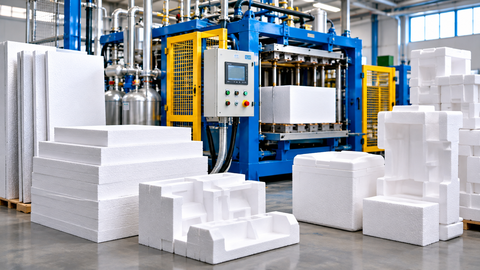
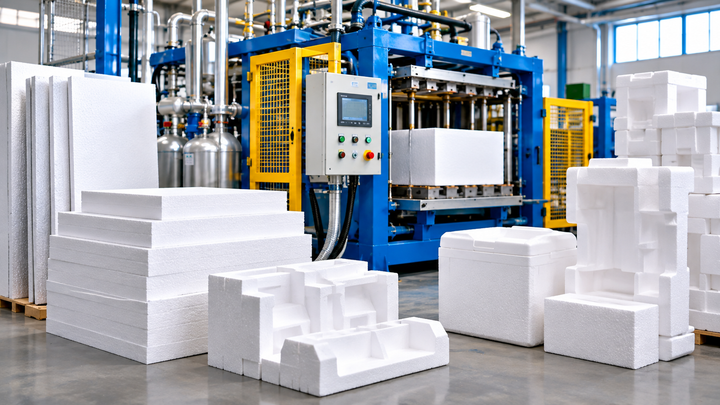
EPS (Expanded Polystyrene) solutions refer to the materials, products, manufacturing processes, and recycling technologies developed using lightweight polystyrene foam.
These solutions are widely used for thermal insulation, protective packaging, construction, food transportation, and industrial applications because of their low weight, cushioning properties, and insulating performance.
EPS is manufactured by expanding polystyrene beads into a cellular foam structure. Depending on the intended application, it can be molded into customized shapes, insulation boards, protective containers, and packaging components. Modern EPS solutions also include recycling and material recovery systems that help manage used foam products.
Quick Facts About EPS Solutions
The following table highlights the essential characteristics and applications of expanded polystyrene technology.
Feature | Details |
|---|---|
Full Form | Expanded Polystyrene |
Material Type | Lightweight thermoplastic foam |
Raw Material | Expandable polystyrene beads |
Main Structure | Closed-cell foam |
Manufacturing Method | Steam expansion and molding |
Key Properties | Lightweight, cushioning, and thermal insulation |
Common Forms | Blocks, sheets, boards, molded shapes, and containers |
Main Industries | Construction, packaging, food processing, and logistics |
Recycling Methods | Mechanical compaction, thermal densification, and material recovery |
Primary Applications | Building insulation, protective packaging, and transportation |
What Are EPS Solutions?
EPS solutions include different products and technologies manufactured using expanded polystyrene. The material is created by expanding small polystyrene beads through a controlled heating process. The expanded beads are then molded into products with specific shapes, densities, and physical properties.
EPS contains numerous small cells filled primarily with air. This structure provides thermal insulation while keeping the material lightweight. Its cushioning characteristics also make it suitable for protecting fragile products during storage and transportation.
EPS solutions generally fall into three major categories:
EPS manufacturing solutions: Equipment and processes used to produce foam blocks, sheets, and molded components.
EPS product solutions: Finished materials designed for construction, packaging, insulation, and industrial applications.
EPS recycling solutions: Technologies used to collect, process, compact, and recover used polystyrene foam.
For example, a construction company may use EPS insulation boards in building walls, while a logistics company may use molded EPS packaging to protect sensitive electronic equipment. Recycling facilities can process discarded EPS packaging into denser polystyrene material for further processing.
Why EPS Solutions Matter Across Industries
EPS technology supports several industrial activities because its physical properties can be adapted to different product requirements. Its lightweight structure reduces the amount of material needed to create protective packaging, while its insulating characteristics support temperature management and building energy efficiency.
EPS solutions are particularly relevant in applications where weight, thermal performance, cushioning, and customized shapes are important.
Key reasons industries use EPS include:
Thermal insulation: Helps reduce heat transfer in building structures and temperature-sensitive applications.
Impact protection: Absorbs and distributes mechanical forces during product handling and transportation.
Lightweight construction: Reduces the weight of packaging components and selected construction assemblies.
Product customization: Can be molded into shapes designed for specific equipment and products.
Moisture resistance: Its closed-cell structure limits water absorption under suitable application conditions.
Material recovery: Used EPS can be processed through appropriate recycling systems.
The suitability of EPS depends on factors such as density, compressive strength, temperature exposure, fire performance, and installation requirements.
How EPS Manufacturing Solutions Work
EPS manufacturing involves several controlled stages that transform expandable polystyrene beads into finished foam products. The process generally includes pre-expansion, conditioning, molding, cooling, and finishing.
1. Raw Material Preparation
The manufacturing process begins with expandable polystyrene beads containing a blowing agent. These beads are inspected and prepared according to the required product specifications.
Material quality, bead characteristics, and additives can influence the properties of the finished foam.
2. Pre-Expansion
The expandable beads are introduced into a pre-expansion machine, where controlled steam heating softens the polystyrene and activates the blowing agent.
As the beads expand, their volume increases and their bulk density decreases. The required expansion level depends on the intended application.
3. Conditioning and Maturation
The expanded beads are transferred into storage silos or conditioning systems.
During this stage, the beads cool and stabilize. Air enters the cellular structure while residual blowing agent gradually diffuses out. This conditioning helps prepare the material for consistent molding.
4. Molding and Shaping
Conditioned beads are transferred into a suitable mold. Steam is introduced to soften the bead surfaces and encourage them to fuse together.
The mold determines the final product shape, which may include packaging inserts, insulation components, containers, or large foam blocks.
5. Cooling and Stabilization
After molding, the product is cooled to stabilize its structure and dimensions. Vacuum systems and cooling arrangements may be used to improve the process.
6. Cutting and Finishing
Large EPS blocks can be cut into sheets, boards, or customized shapes using suitable cutting equipment.
The finished products are inspected for dimensions, density, surface quality, and other application-specific requirements.
The following table summarizes the manufacturing workflow.
Manufacturing Stage | Equipment Used | Main Purpose |
|---|---|---|
Raw Material Preparation | Material handling equipment | Prepare expandable beads |
Pre-Expansion | EPS pre-expander | Expand polystyrene beads |
Conditioning | Storage silos | Stabilize expanded beads |
Molding | EPS shape or block molding machine | Form the required product |
Cooling | Cooling and vacuum systems | Stabilize molded products |
Cutting | EPS cutting machine | Produce required dimensions |
Quality Inspection | Testing and measuring equipment | Verify product characteristics |
Main Types of EPS Solutions
EPS solutions are available in different product forms and technical configurations. Their classification depends on the manufacturing method, intended application, and required physical performance.
1. EPS Insulation Board Solutions
EPS insulation boards are manufactured by expanding and molding polystyrene beads into large blocks, which are subsequently cut into boards.
These boards are used in building walls, roofs, floors, and selected foundation applications.
Main characteristics:
Lightweight construction material.
Available in different densities and thicknesses.
Provides thermal insulation.
Can be cut into different dimensions.
Typical applications: Residential buildings, commercial structures, industrial facilities, and prefabricated construction systems.
2. Molded EPS Packaging Solutions
Molded EPS packaging is designed to protect products against mechanical impacts during handling, storage, and transportation.
Manufacturers use customized molds to create protective components that match the dimensions and shape of individual products.
Main characteristics:
Customized protective shapes.
Shock-absorbing cellular structure.
Lightweight packaging components.
Suitable for fragile and sensitive products.
Typical applications: Electronics, household appliances, industrial components, and precision equipment.
3. EPS Food Packaging Solutions
EPS food packaging products are designed for applications that require lightweight containers and thermal insulation.
Common products include food trays, insulated boxes, and temperature-sensitive transportation containers.
Main characteristics:
Lightweight container construction.
Thermal insulation properties.
Available in different shapes and sizes.
Suitable for appropriately designed food-contact applications.
Typical applications: Seafood transportation, chilled food distribution, takeaway packaging, and food processing.
4. EPS Construction and Civil Engineering Solutions
EPS construction products are used in selected building and infrastructure applications. Their low weight and insulation characteristics make them useful in engineered construction systems.
Applications include insulation boards, lightweight fill materials, and specialized structural components.
Main characteristics:
Low material weight.
Thermal insulation capabilities.
Suitable for engineered lightweight fill applications.
Can be manufactured in different shapes and dimensions.
Typical applications: Road embankments, building foundations, floor insulation, and infrastructure projects.
5. EPS Recycling Solutions
EPS recycling solutions are designed to manage discarded foam materials and prepare them for recovery.
These systems may include shredders, compactors, hot-melt densifiers, and material processing equipment.
Main characteristics:
Reduces the volume of bulky foam waste.
Supports material collection and transportation.
Produces denser material for further processing.
Can support mechanical recycling operations.
Typical applications: Packaging waste facilities, manufacturing plants, distribution centers, and recycling operations.
EPS Solutions Type Comparison
The following comparison explains the differences between major EPS product and technology categories.
EPS Solution Type | Primary Function | Main Output | Common Industry |
|---|---|---|---|
Insulation Boards | Reduce heat transfer | EPS boards and panels | Construction |
Molded Packaging | Protect products | Custom foam inserts | Manufacturing |
Food Packaging | Provide insulation and containment | Trays and containers | Food Processing |
Construction Solutions | Provide lightweight fill and insulation | Blocks and engineered components | Civil Engineering |
Recycling Solutions | Recover used foam material | Compacted blocks or recovered polystyrene | Waste Management |
These categories describe application-oriented EPS solutions rather than separate chemical types of polystyrene.
EPS vs XPS: Understanding the Differences
Expanded Polystyrene (EPS) and Extruded Polystyrene (XPS) are two different rigid polystyrene foam materials commonly used for thermal insulation.
Although they share a similar polymer base, their manufacturing processes and cellular structures differ.
Comparison Factor | EPS | XPS |
|---|---|---|
Full Form | Expanded Polystyrene | Extruded Polystyrene |
Manufacturing | Steam expansion and bead molding | Extrusion of polymer melt |
Cellular Structure | Fused expanded beads with closed cells | More uniform continuous foam structure |
Product Forms | Boards, blocks, and molded shapes | Primarily rigid boards |
Moisture Behavior | Depends on density and product construction | Generally lower water absorption |
Mechanical Properties | Available across different strength grades | Commonly manufactured for relatively high compressive strength |
Main Applications | Packaging, insulation, and construction | Building insulation and specialized construction |
Custom Shapes | Suitable for molded packaging | Primarily manufactured as continuous boards |
Neither material is automatically suitable for every application. Selection should consider thermal performance, moisture exposure, compressive loading, fire requirements, and installation conditions.
Main Components and Equipment Used in EPS Solutions
EPS production and recycling facilities use different machines depending on the required output. A manufacturing facility generally requires expansion and molding equipment, while a recycling facility uses material preparation and densification systems.
Equipment | Main Function | Application |
|---|---|---|
EPS Pre-Expander | Expands raw polystyrene beads | EPS manufacturing |
EPS Storage Silo | Conditions expanded beads | Material preparation |
EPS Shape Molding Machine | Produces customized foam components | Packaging and industrial products |
EPS Block Molding Machine | Produces large foam blocks | Insulation board manufacturing |
EPS Cutting Machine | Cuts foam into required dimensions | Construction and packaging |
EPS Shredder | Breaks foam into smaller pieces | Recycling |
EPS Cold Compactor | Compresses foam mechanically | Waste volume reduction |
EPS Hot Melt Densifier | Uses heat and mechanical force to densify foam | Material recovery |
Extrusion System | Processes recovered polystyrene | Recycled plastic production |
The equipment configuration depends on the type of EPS material being processed, production capacity, contamination levels, and the intended final product.
Applications of EPS Solutions Across Industries
EPS technology supports a wide range of commercial and industrial operations. Its combination of lightweight construction, insulation, and cushioning properties makes it suitable for several specialized applications.
1. Construction and Building Insulation
The construction industry uses EPS boards and molded insulation products in walls, floors, roofs, and other building assemblies.
These products help reduce heat transfer between indoor and outdoor environments. Their performance depends on board thickness, thermal conductivity, installation quality, and the complete building design.
Common applications include:
External wall insulation systems.
Internal wall insulation.
Roof insulation.
Floor insulation.
Prefabricated building panels.
2. Industrial and Protective Packaging
Manufacturers use EPS packaging to protect products during transportation and storage.
Custom-molded components can support products in fixed positions and distribute impact forces during handling.
Typical applications include:
Electronic equipment packaging.
Household appliance protection.
Industrial machinery components.
Laboratory equipment transportation.
Fragile product packaging.
3. Food Processing and Cold Chain Logistics
EPS containers are used to transport products that require temperature management during distribution.
Their insulating structure helps slow heat transfer, although maintaining the required temperature also depends on container design, cooling materials, loading conditions, and transportation duration.
Common applications include seafood transportation, chilled food distribution, and selected temperature-sensitive food packaging.
4. Civil Engineering and Infrastructure
Engineered EPS geofoam is used in selected civil engineering applications where lightweight fill material is required.
It can help reduce the weight of embankments and other engineered structures compared with conventional soil fill.
Applications include:
Road embankments.
Bridge approach fills.
Lightweight foundation systems.
Ground improvement projects.
Infrastructure rehabilitation.
5. Automotive and Transportation
EPS is used in selected transportation applications where lightweight structures and impact absorption are required.
Examples include protective components, equipment packaging, and specialized molded components.
The suitability of EPS in vehicle-related applications depends on the relevant mechanical, fire, and regulatory requirements.
6. Electrical and Electronic Equipment
Electronic devices often require protective packaging to reduce damage during transportation and handling.
Molded EPS components can be designed around product dimensions, providing cushioning and separation between sensitive components.
Applications include computer equipment, televisions, household electronics, and electrical appliances.
7. Horticulture and Agricultural Applications
EPS products are also used in selected agricultural and horticultural applications.
Examples include seedling trays, propagation containers, and insulated transportation boxes for agricultural products.
Their suitability depends on durability, sanitation, drainage, and the intended reuse or disposal arrangements.
EPS Recycling Solutions and Waste Management
EPS recycling is an important part of material management because discarded foam products occupy substantial storage and transportation volume relative to their weight.
The recycling process generally involves collection, sorting, contamination removal, size reduction, densification, and further material processing.
1. Collection and Sorting
Used EPS materials are collected from packaging facilities, manufacturing operations, distribution centers, and other waste streams.
The collected material is sorted to separate EPS from other plastics, paper, food residues, and unwanted materials.
2. Cleaning and Preparation
Contaminated EPS may require cleaning before further processing.
Food particles, labels, adhesives, and other unwanted materials can affect the quality of recovered polystyrene.
3. Size Reduction
Shredders or grinders break bulky EPS products into smaller pieces.
This makes the material easier to feed into compaction or densification equipment.
4. Densification
EPS foam is processed through a suitable densification system to reduce its volume.
The two common mechanical approaches are cold compaction and hot-melt densification.
5. Further Material Processing
The recovered material can be transported to suitable processing facilities for additional recycling operations.
Depending on material quality and the selected recycling route, it may be reprocessed into polystyrene feedstock or other products.
Types of EPS Recycling Machines
Different recycling machines use different operating principles to process discarded EPS foam.
Cold Compactor
A cold compactor uses mechanical force to compress shredded or prepared EPS without intentionally melting the material.
It produces compacted blocks or logs that are easier to store and transport.
Hot Melt Densifier
A hot-melt densifier uses heat and mechanical action to soften and compact EPS foam.
The resulting material is typically discharged as dense polystyrene blocks or ingots after cooling.
EPS Shredder
An EPS shredder reduces large foam pieces into smaller particles.
It is generally used as a preparation stage before compaction, densification, or further material processing.
Polystyrene Extrusion System
An extrusion system processes recovered polystyrene through heating and mechanical conveying.
Depending on the equipment configuration, it can produce recycled polystyrene material in a form suitable for subsequent manufacturing.
Common EPS Processing Challenges and Solutions
EPS manufacturing and recycling operations can experience material handling, production, and quality-related challenges.
Common Challenge | Possible Impact | Recommended Solution |
|---|---|---|
Inconsistent Bead Expansion | Uneven product density | Control steam conditions and material feeding |
Poor Bead Fusion | Weak molded products | Optimize molding conditions |
Dimensional Variation | Incorrect product measurements | Improve mold and process control |
Material Contamination | Reduced recycling quality | Improve sorting and cleaning |
Bulky Foam Waste | Increased storage requirements | Use suitable densification equipment |
Excessive Material Moisture | Processing difficulties | Improve drying and material preparation |
Equipment Wear | Production interruptions | Follow preventive maintenance procedures |
Inconsistent Recycled Material | Variable downstream performance | Monitor feedstock quality and processing conditions |
The most appropriate solution depends on the material condition, manufacturing requirements, and the final application.
How to Choose the Right EPS Solutions
Selecting an EPS solution requires understanding the intended application and the physical performance requirements of the finished product.
A packaging manufacturer, construction company, and recycling facility will have different equipment and material requirements.
The following selection factors can help guide the evaluation process.
Selection Factor | What to Evaluate | Why It Matters |
|---|---|---|
Application | Packaging, insulation, or recycling | Defines the required product |
Material Density | Required density range | Influences mechanical performance |
Compressive Strength | Expected loading conditions | Determines suitability for structural applications |
Thermal Performance | Required insulation characteristics | Supports temperature management |
Moisture Exposure | Environmental conditions | Helps determine material suitability |
Product Dimensions | Required shapes and thicknesses | Influences manufacturing equipment |
Production Capacity | Expected material throughput | Determines equipment configuration |
Recycling Requirements | Contamination and material condition | Influences processing technology |
Equipment Compatibility | Existing production infrastructure | Supports integration |
Safety Requirements | Fire performance and workplace conditions | Helps meet application requirements |
For construction applications, thermal performance, compressive strength, moisture exposure, and fire classification should be evaluated together.
For packaging applications, the focus should be on product dimensions, impact protection, stacking requirements, and transportation conditions.
For recycling operations, material cleanliness, processing capacity, output quality, and the availability of downstream recyclers are important considerations.
Benefits and Advantages of EPS Solutions
EPS offers several practical advantages when its characteristics match the intended application.
Lightweight construction: Its cellular structure provides useful physical properties without adding substantial material weight.
Thermal insulation: EPS helps limit heat transfer in building assemblies and selected temperature-sensitive applications.
Impact absorption: Molded EPS packaging can protect fragile products against handling-related impacts.
Flexible manufacturing: Different molds and cutting methods allow manufacturers to create various product shapes.
Moisture resistance: EPS has relatively low water absorption compared with many conventional porous materials, although actual performance depends on product design and exposure.
Recycling potential: Suitable EPS waste can be collected, densified, and processed through established recycling routes.
Transportation efficiency: Lightweight packaging components can reduce the weight associated with transporting protected products.
Limitations and Environmental Considerations of EPS
Despite its useful characteristics, EPS has limitations that should be considered before selecting it for industrial or construction applications.
Fire behavior: EPS is combustible and requires appropriate fire protection and compliance with applicable building requirements.
Solvent sensitivity: Certain organic solvents can damage or dissolve polystyrene.
Waste volume: Uncompacted EPS occupies considerable storage and transportation space.
Environmental dispersion: Lightweight foam fragments can spread into the environment when waste is not properly contained.
Mechanical limitations: Compressive and impact performance depend on product density, design, and loading conditions.
Temperature limitations: Conventional EPS is not suitable for every high-temperature application.
Recycling challenges: Food contamination, mixed materials, and collection difficulties can affect recycling operations.
EPS should be selected according to the requirements of the complete application rather than its insulation or cushioning properties alone.
Industry Standards and Safety Requirements for EPS
EPS products used in construction and industrial environments must meet applicable material, performance, and safety requirements.
Several recognized standards are relevant to different EPS applications.
EN 13163
EN 13163 covers factory-made expanded polystyrene products used for thermal insulation in buildings. It addresses product characteristics, testing, evaluation of conformity, marking, and labeling.
EN 14309
EN 14309 addresses factory-made EPS products used for thermal insulation of building equipment and industrial installations.
EN 13501-1
EN 13501-1 provides a classification framework for the fire performance of construction products and building elements.
ASTM C578
ASTM C578 covers rigid, cellular polystyrene thermal insulation materials, including applicable requirements for physical and thermal properties.
ASTM D1621
ASTM D1621 covers the determination of compressive properties of rigid cellular plastics.
The applicable requirements depend on the intended product, installation environment, and jurisdiction. Manufacturers and project designers should verify the relevant standard editions and local requirements.
Future Trends in EPS Manufacturing and Recycling Solutions
EPS technology continues to develop through improvements in manufacturing efficiency, material recovery, and product design.
Advanced EPS Recycling Equipment
Modern recycling operations are increasingly focused on improving sorting, size reduction, densification, and material preparation. Better process integration can help improve the consistency of recovered polystyrene.
Improved Material Recovery
Mechanical and chemical recycling approaches are being developed to expand the range of polystyrene waste streams that can be processed. Their suitability depends on material purity, process requirements, and the quality of recovered output.
Energy-Efficient Manufacturing
EPS manufacturers continue to evaluate steam management, process control, equipment efficiency, and production optimization to improve manufacturing operations.
Recycled Content in New Products
Recovered polystyrene can be incorporated into selected new materials through suitable processing routes. The permitted recycled content and resulting product properties depend on application requirements and manufacturing methods.
Better Waste Collection Systems
Improved collection and sorting arrangements can help reduce contamination and make bulky EPS waste easier to recover.
These developments indicate a growing focus on managing EPS across its complete lifecycle, from raw material processing and product manufacturing to collection and recycling.
Frequently Asked Questions About EPS Solutions
1. What does EPS stand for?
EPS stands for Expanded Polystyrene. It is a lightweight thermoplastic foam manufactured by expanding polystyrene beads through a controlled heating and molding process.
2. What are the main types of EPS solutions?
The main categories include EPS insulation boards, molded packaging, food packaging, construction products, and recycling solutions. Each category is designed for different industrial and commercial requirements.
3. How are EPS products manufactured?
EPS products are manufactured through pre-expansion, conditioning, molding, cooling, and finishing. Steam is commonly used to expand and fuse polystyrene beads into the required product shapes.
4. What are the main applications of EPS?
EPS is commonly used in building insulation, protective packaging, food transportation, industrial product protection, civil engineering, and selected agricultural applications.
5. Is EPS suitable for building insulation?
Yes. EPS is widely used in building walls, roofs, and floors because of its thermal insulation properties. The appropriate product must meet the required thermal, mechanical, moisture, and fire performance specifications.
6. What is the difference between EPS and XPS?
EPS is manufactured by expanding and molding polystyrene beads, while XPS is produced through an extrusion process. Their cellular structures, moisture behavior, and mechanical properties differ.
7. How does an EPS recycling machine work?
An EPS recycling machine processes used foam through stages such as shredding, compaction, or thermal densification. The resulting material has a smaller volume and can be prepared for further polystyrene recycling.
8. Can expanded polystyrene be recycled?
Yes. EPS can be mechanically recycled through suitable collection, sorting, size reduction, and densification processes. The quality and condition of the collected material influence the available recycling options.
9. What machines are used in EPS manufacturing?
Common equipment includes EPS pre-expanders, storage silos, block molding machines, shape molding machines, and cutting systems. Recycling facilities may additionally use shredders, cold compactors, hot-melt densifiers, and extrusion systems.
10. What are the main limitations of EPS?
EPS has limitations involving fire behavior, solvent sensitivity, waste volume, environmental dispersion, and temperature resistance. Its suitability depends on the intended application and relevant technical requirements.
Conclusion
EPS solutions support a broad range of industrial activities, including construction, packaging, food transportation, manufacturing, and waste management. Their lightweight structure, thermal insulation, and cushioning properties make expanded polystyrene useful in applications requiring specialized material performance.
Understanding the different EPS product types, manufacturing processes, equipment configurations, and recycling methods helps organizations select appropriate solutions for their operational requirements. With continued developments in material recovery, production efficiency, and recycling technology, EPS solutions are also evolving toward more effective material management throughout the product lifecycle.