Relay testing equipment refers to specialized electrical instruments used to verify the performance and reliability of protective relays in power systems. Protective relays are devices that monitor electrical parameters—such as current, voltage, frequency, and impedance—and automatically trigger circuit breakers when abnormal conditions occur.
These relays are critical for protecting electrical infrastructure including power plants, substations, transmission lines, and industrial electrical networks. However, protective relays must operate accurately and quickly during faults. Relay testing equipment exists to simulate electrical conditions and confirm that relays respond correctly according to design specifications.
Without proper testing, a relay might fail to detect faults or might operate unnecessarily. Both scenarios can disrupt electrical networks, damage equipment, or compromise safety. Relay testing systems allow engineers to validate relay behavior before installation, during commissioning, and throughout operational maintenance cycles.
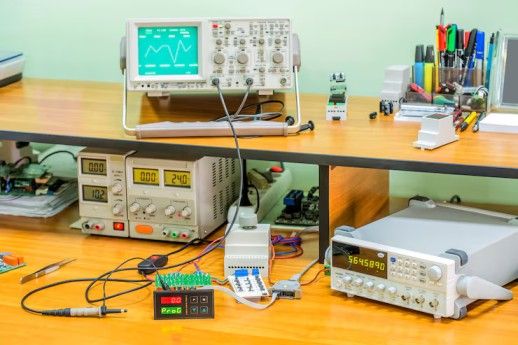
Importance: Why Relay Testing Matters Today
Relay testing has become increasingly important as electrical networks grow more complex and interconnected. Modern power grids incorporate renewable energy systems, automated substations, and advanced digital protection schemes, all of which depend on accurate relay operation.
Why relay testing matters today
-
Power system protection: Ensures faults are isolated quickly to prevent widespread outages
-
Infrastructure reliability: Prevents damage to transformers, generators, and transmission equipment
-
Operational safety: Protects workers and equipment from electrical hazards
-
Grid stability: Maintains proper coordination between protection devices
-
Compliance with standards: Ensures electrical installations meet regulatory requirements
Relay testing affects power system engineers, utility operators, maintenance technicians, protection specialists, and electrical inspectors. It solves problems such as misconfigured relay settings, delayed fault response, false tripping, and coordination errors between protection devices.
In modern smart grids, where automation and digital communication are integrated, reliable relay operation is essential to maintain stable power distribution.
Recent Updates: Trends and Developments (2024–2025)
Over the past year, relay testing technology has evolved alongside advancements in power system protection and digital substations.
| Year | Development or Trend | Technical Impact |
|---|---|---|
| 2024 | Increased adoption of digital relay testing platforms | Faster configuration and automated analysis |
| 2024 | Integration with IEC 61850 communication testing | Improved testing of digital substations |
| 2025 | Portable multifunction relay test systems | Greater flexibility for field testing |
| 2025 | Advanced simulation capabilities | More accurate fault scenario testing |
Recent developments also include better time-synchronization methods using GPS-based signals for protection scheme verification and improved graphical analysis tools for evaluating relay responses.
With the expansion of renewable energy systems and distributed generation, relay testing now includes more dynamic scenarios involving variable power flows and inverter-based sources.
Laws, Standards, and Regulatory Influence
Relay testing is governed by international electrical engineering standards and national regulatory frameworks to ensure safety and reliability.
Common standards influencing relay testing include:
-
IEC 60255 – Performance and testing requirements for protective relays
-
IEC 61850 – Communication standards for digital substations
-
IEEE C37 series – Protection system standards used in power networks
-
National electrical safety codes – Guidelines for installation and maintenance of protection systems
Government energy authorities and grid regulators often require utilities to conduct periodic relay testing and documentation. Compliance ensures that protection systems meet reliability and safety expectations within national power infrastructure.
In many countries, relay testing records are required during commissioning of new substations and during scheduled maintenance inspections.
Working Principles of Relay Testing Equipment
Relay testing equipment works by generating controlled electrical signals that mimic real operating conditions in a power system. These signals are injected into the relay to observe how it responds.
Basic working principle
-
The test set generates simulated voltage or current signals
-
These signals represent normal operation or fault conditions
-
The relay detects the simulated parameters
-
The tester measures response time and trip behavior
-
Results are compared with relay settings and expected performance
Testing verifies whether the relay operates within acceptable tolerance limits for timing, sensitivity, and coordination.
Types of Relay Testing Equipment
Relay test equipment is generally classified based on testing method and functionality.
| Test Equipment Type | Purpose | Typical Use |
|---|---|---|
| Primary injection test sets | Inject high current directly into primary circuits | Transformer and breaker testing |
| Secondary injection test kits | Inject signals directly into relay inputs | Relay functional testing |
| Multifunction relay test systems | Simulate multiple electrical parameters simultaneously | Advanced protection testing |
| Portable relay test units | Field testing and commissioning | Substation maintenance |
| Automated relay testing systems | Scripted and repeatable test procedures | Laboratory and research environments |
Each type is selected based on the complexity of the protection scheme and the required test accuracy.
Protection Testing Methods
Several testing methods are used to validate protective relay performance.
Common protection testing methods
-
Secondary injection testing: Verifies relay logic and settings without energizing primary equipment
-
Primary injection testing: Confirms correct operation of the entire protection circuit
-
Timing tests: Measures relay trip response time during simulated faults
-
Functional testing: Checks relay behavior under different operating conditions
-
End-to-end testing: Validates protection schemes across communication networks
These tests ensure that protection systems respond accurately to abnormal conditions while avoiding unnecessary interruptions.
Tools and Resources for Relay Testing
Professionals working with relay testing rely on multiple technical tools and reference resources.
Common technical resources
-
Relay setting calculation templates
-
Fault current calculation tools
-
Protection coordination charts
-
Electrical system simulation platforms
-
Technical manuals for protective relays
Learning resources
-
Power system protection textbooks
-
Electrical engineering training courses
-
Utility company technical guidelines
-
Professional engineering association publications
-
Substation automation training materials
These resources help engineers understand protection coordination, relay configuration, and testing procedures.
Frequently Asked Questions
What is the main purpose of relay testing equipment?
Its main purpose is to verify that protective relays operate correctly during abnormal electrical conditions and protect power system equipment.
Why is relay testing important in substations?
It ensures that protection systems isolate faults quickly and prevent damage to electrical infrastructure.
What is the difference between primary and secondary injection testing?
Primary injection tests the entire protection circuit including current transformers, while secondary injection tests only the relay itself.
How often should protective relays be tested?
Testing intervals vary by system requirements but are typically scheduled during commissioning and routine maintenance.
Can relay testing detect configuration errors?
Yes. Testing helps identify incorrect relay settings, wiring problems, or coordination issues.
Conclusion
Relay testing equipment is a vital component of modern electrical power system maintenance and protection. By simulating real-world electrical conditions, these systems verify that protective relays respond accurately to faults and abnormal events.
As power networks become more advanced with digital substations and renewable energy integration, relay testing continues to evolve with more precise simulation tools and automated analysis capabilities. Understanding relay testing principles, equipment types, and protection methods provides valuable insight into how electrical systems remain safe, reliable, and resilient.