Metal Crushers: Equipment Overview and Applications
Metal crushers are industrial machines designed to reduce the size of metal materials into smaller pieces for processing, recycling, transportation, and resource recovery.
They play an important role in manufacturing, recycling facilities, automotive dismantling operations, and metal processing industries.
As industries continue to focus on efficient material handling and resource utilization, metal crushers have become essential equipment for managing scrap metal and preparing materials for further processing. These machines help improve handling efficiency while supporting material recovery efforts.
This article explains how metal crushers work, their major types, applications, benefits, operating considerations, and future industry developments.
Understanding Metal Crushers
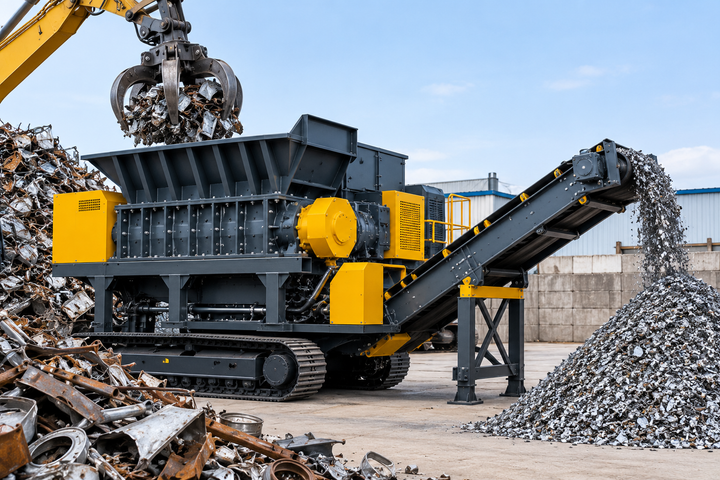
A metal crusher is a machine that applies mechanical force to break, compress, or shred metal objects into smaller pieces. The resulting material is easier to transport, sort, separate, and process.
Metal crushers are commonly used for processing:
- Scrap metal
- Aluminum products
- Steel components
- Automotive parts
- Industrial equipment
- Metal containers
- Manufacturing waste
The size reduction process helps improve efficiency in recycling and material management operations.
Quick Facts About Metal Crushers
| Feature | Description |
|---|---|
| Primary Function | Metal size reduction |
| Common Materials | Steel, aluminum, copper, iron |
| Industry Usage | Recycling and manufacturing |
| Operation Type | Mechanical crushing |
| Output Material | Smaller metal fragments |
| Processing Goal | Material preparation |
| Common Facilities | Scrap yards and recycling plants |
| Key Benefit | Improved material handling |
How Metal Crushers Work
Metal crushers use mechanical force to break larger metal objects into smaller fragments.
Step 1: Material Feeding
Metal materials enter the crushing chamber through a feeding system.
Step 2: Crushing Action
Rotors, hammers, blades, rollers, or jaws apply force to the material.
Step 3: Size Reduction
The material breaks into smaller pieces through repeated impact and compression.
Step 4: Separation
Some systems include magnetic separation to remove ferrous materials.
Step 5: Material Collection
Processed material is collected for transport or further processing.
Metal Crushing Process Overview
| Stage | Purpose |
|---|---|
| Material Feeding | Introduce metal into crusher |
| Crushing | Reduce material size |
| Separation | Sort material types |
| Collection | Gather processed output |
| Transport | Move material for processing |
Metal Crusher Architecture
Understanding machine architecture helps explain overall operation.
Feeding System
Controls the flow of incoming material.
Crushing Chamber
The primary location where size reduction occurs.
Rotor Assembly
Generates impact force in many crusher designs.
Drive System
Provides power to the crushing mechanism.
Discharge System
Transfers processed material out of the machine.
Control System
Manages operational settings and monitoring.
Main Types of Metal Crushers
Hammer Crushers
Hammer crushers use rotating hammers to impact and break metal materials.
Features
- High impact force
- Continuous operation
- Suitable for various scrap materials
Jaw Crushers
Jaw crushers use compression between two plates.
Features
- Strong crushing capability
- Suitable for larger metal pieces
- Durable design
Roll Crushers
Roll crushers use rotating rollers to compress material.
Features
- Controlled size reduction
- Consistent output
- Smooth operation
Shredder Crushers
These machines combine shredding and crushing functions.
Features
- High-volume processing
- Effective for mixed metal materials
- Suitable for recycling facilities
Hydraulic Crushers
Hydraulic systems provide powerful crushing force.
Features
- High-pressure operation
- Precise force control
- Suitable for heavy-duty applications
Metal Crusher Type Comparison
| Crusher Type | Primary Method | Typical Application |
|---|---|---|
| Hammer Crusher | Impact | Scrap processing |
| Jaw Crusher | Compression | Large metal pieces |
| Roll Crusher | Compression | Uniform size reduction |
| Shredder Crusher | Cutting and Impact | Mixed scrap |
| Hydraulic Crusher | Hydraulic Force | Heavy materials |
Materials Commonly Processed
Metal crushers are capable of processing many types of materials.
| Material | Common Source |
|---|---|
| Steel | Industrial scrap |
| Aluminum | Containers and components |
| Copper | Electrical materials |
| Iron | Manufacturing waste |
| Stainless Steel | Industrial equipment |
| Automotive Metal | Vehicle dismantling |
| Mixed Scrap | Recycling facilities |
Capacity Comparison
| Capacity Category | Typical Application |
|---|---|
| Small Capacity | Workshops |
| Medium Capacity | Recycling centers |
| High Capacity | Industrial operations |
| Heavy-Duty Capacity | Large processing facilities |
Applications of Metal Crushers
Metal Recycling Facilities
Crushers prepare scrap material for sorting and recovery.
Automotive Recycling
Vehicle components are reduced into manageable sizes.
Manufacturing Operations
Production waste can be processed efficiently.
Demolition Projects
Metal debris from structures can be prepared for recycling.
Construction Industry
Metal waste generated during construction activities can be processed.
Resource Recovery Facilities
Crushers support the extraction of reusable materials.
Industry Applications
| Industry | Application |
|---|---|
| Recycling | Scrap processing |
| Automotive | Vehicle dismantling |
| Manufacturing | Waste management |
| Construction | Metal debris processing |
| Mining | Material preparation |
| Resource Recovery | Metal separation |
Benefits and Advantages
Improved Material Handling
Smaller metal fragments are easier to transport and store.
Enhanced Processing Efficiency
Size reduction simplifies downstream operations.
Resource Recovery Support
Processed materials can be sorted more effectively.
Storage Optimization
Crushed metal requires less storage space.
Operational Flexibility
Different crusher types support various applications.
Material Preparation
Crushed materials are often easier to process further.
Environmental Considerations
Metal crushing contributes to efficient resource utilization and material recovery.
Resource Conservation
Metal recovery reduces demand for newly extracted raw materials.
Recycling Support
Crushers play an important role in recycling operations.
Waste Reduction
Processing metal scrap helps divert material from disposal sites.
Material Reuse
Recovered metals can return to manufacturing processes.
Industry Standards and Safety
Metal crushers operate in demanding industrial environments and are designed with safety considerations.
Machine Guards
Protective barriers help reduce contact with moving parts.
Emergency Stop Systems
Emergency controls allow rapid shutdown.
Electrical Protection
Systems help safeguard electrical components.
Structural Integrity
Machines are engineered for heavy-duty operation.
Operator Safety Measures
Proper operating procedures support workplace safety.
Safety Features Overview
| Safety Feature | Purpose |
|---|---|
| Emergency Stop | Rapid shutdown |
| Protective Guards | Reduce exposure to moving parts |
| Overload Protection | Prevent equipment stress |
| Monitoring Systems | Track operational conditions |
| Access Controls | Support safe maintenance |
Noise and Operating Environment
Metal crushers often operate in industrial environments where noise management is important.
Processing Facilities
Dedicated processing areas help manage operating conditions.
Recycling Centers
Equipment is often installed within designated processing zones.
Manufacturing Sites
Crushers may support internal material handling operations.
Environmental Controls
Facilities often implement dust and noise management measures.
Common Challenges and Solutions
| Challenge | Practical Solution |
|---|---|
| Material Variability | Adjust processing settings |
| Equipment Wear | Perform routine inspections |
| Dust Generation | Use dust control systems |
| Noise Levels | Implement sound management practices |
| Throughput Changes | Monitor feed rates |
| Maintenance Requirements | Follow maintenance schedules |
Maintenance Schedule
| Maintenance Task | Frequency | Purpose |
|---|---|---|
| Inspect Hammers | Daily | |
| Check Bearings | Weekly | |
| Lubricate Components | Weekly | |
| Inspect Drive System | Monthly | |
| Verify Safety Systems | Monthly | |
| Structural Inspection | Periodically |
Best Practices
- Feed materials consistently.
- Monitor equipment performance regularly.
- Follow maintenance schedules.
- Inspect wear components frequently.
- Maintain safe operating procedures.
- Keep processing areas organized.
Expert Insights
Industry specialists often emphasize that crusher selection depends on material type, processing volume, and desired output size. Matching equipment capabilities to operational requirements can improve efficiency and equipment longevity.
Routine maintenance and proper material preparation are frequently cited as important factors in achieving consistent crusher performance.
Key Facts About Metal Crushers
- Metal crushers support recycling and resource recovery.
- Multiple crusher designs are available for different materials.
- Size reduction improves transportation efficiency.
- Processed scrap is easier to sort and separate.
- Industrial automation continues to influence crusher technology.
Future Trends and Industry Insights
Smart Monitoring Systems
Advanced sensors are increasingly used for performance tracking.
Automation Integration
Automated controls can improve operational consistency.
Energy Efficiency Improvements
Manufacturers continue developing more efficient equipment.
Enhanced Material Separation
Improved separation technologies support recovery processes.
Predictive Maintenance
Data-driven maintenance systems may help reduce downtime.
Frequently Asked Questions
What is a metal crusher?
A machine designed to reduce the size of metal materials through mechanical force.
What materials can metal crushers process?
Steel, aluminum, copper, iron, stainless steel, and mixed scrap materials.
Why are metal crushers important?
They improve material handling, recycling efficiency, and resource recovery.
What industries use metal crushers?
Recycling, manufacturing, automotive, construction, mining, and resource recovery industries.
What is a hammer crusher?
A crusher that uses rotating hammers to break materials through impact.
What is a jaw crusher?
A machine that reduces material size through compression between two surfaces.
How do metal crushers support recycling?
They prepare materials for sorting, separation, and resource recovery.
What safety features are commonly included?
Emergency stops, protective guards, monitoring systems, and overload protection.
Why is maintenance important?
Maintenance helps support reliable operation and equipment longevity.
What future technologies are influencing metal crushers?
Automation, smart monitoring, predictive maintenance, and improved separation technologies.
Conclusion
Metal crushers are essential industrial machines that support material processing, recycling, and resource recovery operations. By reducing metal materials into manageable sizes, they improve transportation, storage, sorting, and processing efficiency.
As industrial operations continue to evolve, advances in automation, monitoring technology, and equipment efficiency are expected to further enhance the capabilities of metal crushers across recycling, manufacturing, construction, and resource recovery sectors.