Paper Mill Machinery Basics: Systems, Processes, and Key Equipment
Paper mill machinery transforms fiber materials into finished paper products.
These machines support several connected production stages. Each stage prepares, forms, presses, dries, or finishes the paper.
Modern paper manufacturing machinery combines mechanical, electrical, and automated systems. Understanding these systems helps explain how large-scale paper production works.
Quick Answer: What Is Paper Mill Machinery?
- Paper mill machinery supports the industrial production of paper.
- It processes prepared fibers into continuous paper sheets.
- Major stages include stock preparation, forming, pressing, drying, and finishing.
- Different machines perform specific functions during each production stage.
- Sensors and control systems help maintain consistent operating conditions.
- Equipment configurations vary according to the required paper grade.
- Regular inspection and maintenance support reliable mill operations.
What Does Paper Mill Machinery Do?
Paper mill machinery converts prepared fiber stock into usable paper.
The process begins with a mixture containing fibers and water. Machinery gradually forms this mixture into a continuous sheet.
The equipment then removes moisture and improves sheet properties. Finishing systems prepare the paper for later processing.
How Does the Paper Manufacturing Process Work?
Paper production involves several connected stages. Each stage changes the physical characteristics of the material.
How Is Fiber Stock Prepared?
Stock preparation equipment prepares fibers before sheet formation.
This stage may involve:
- Pulping
- Screening
- Cleaning
- Refining
- Mixing
- Consistency control
The goal is a uniform fiber suspension.
How Is the Paper Sheet Formed?
Prepared stock enters the forming section.
The mixture spreads across a moving forming fabric. Water drains away while fibers begin forming a continuous web.
Controlled drainage is important. It affects sheet formation and structural uniformity.
How Is Water Removed During Pressing?
The wet sheet moves into the press section.
Press rolls and fabrics remove additional water mechanically. This stage also improves sheet consolidation.
Efficient pressing reduces the moisture entering the drying section.
How Is Paper Dried?
The paper web enters the dryer section after pressing.
Heated dryer cylinders remove remaining moisture. The sheet travels through a carefully controlled drying sequence.
Temperature and moisture control are important. Uneven drying can affect paper properties.
How Is Finished Paper Prepared?
After drying, paper may undergo additional finishing processes.
These can include:
- Calendering
- Coating
- Surface treatment
- Winding
- Rewinding
- Slitting
Finishing helps create the required sheet characteristics.
What Are the Main Types of Paper Mill Machinery?
Paper mills use many interconnected equipment systems.
What Is Stock Preparation Equipment?
Stock preparation systems condition pulp before paper formation.
Common equipment includes:
- Hydrapulpers
- Refiners
- Pressure screens
- Cleaners
- Agitators
- Mixing equipment
- Stock chests
These systems help maintain suitable fiber characteristics.
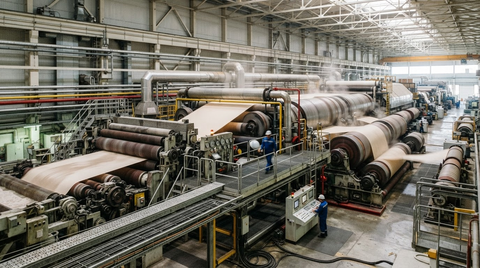
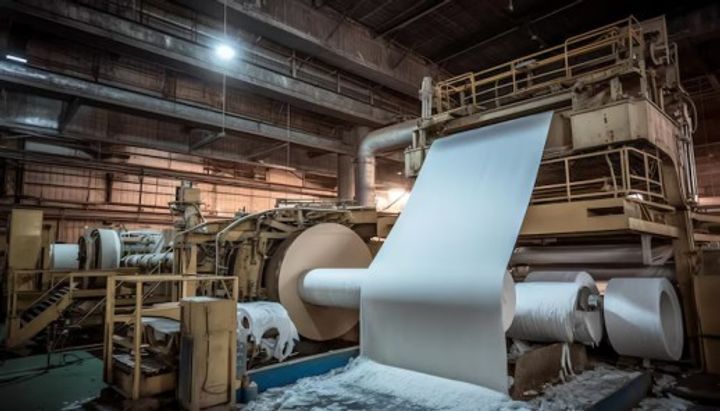
What Is a Paper Machine?
A paper machine forms a continuous sheet from prepared fiber stock.
Major sections generally include:
- Headbox
- Forming section
- Press section
- Dryer section
- Calender
- Reel section
Each section performs a different production function.
How Does a Paper Machine Headbox Work?
The headbox delivers prepared stock to the forming section.
It distributes the fiber suspension across the machine width. Uniform distribution supports consistent sheet formation.
Flow conditions require careful control. Variations can influence paper structure.
What Happens in the Forming Section?
The forming section begins the physical creation of paper.
Stock flows onto a moving fabric. Water separates from the fibers through drainage.
Different forming arrangements may include:
- Fourdrinier forming
- Twin-wire forming
- Gap forming
- Hybrid forming
The selected configuration depends on production requirements.
How Does the Press Section Work?
The press section removes water using mechanical pressure.
The paper web passes through press nips. Specialized fabrics support water removal.
Modern press arrangements may use:
- Roll presses
- Shoe presses
- Extended nip systems
Effective pressing improves downstream drying efficiency.
How Does the Dryer Section Work?
The dryer section removes moisture using controlled heat.
Paper travels around multiple heated cylinders. Dryer fabrics help maintain contact and web stability.
Important operating factors include:
- Steam conditions
- Surface temperature
- Web tension
- Ventilation
- Moisture profile
Balanced conditions support uniform drying.
What Is Calendering in Paper Manufacturing?
Calendering changes the surface properties of paper.
The sheet passes between controlled rolls. This process can improve smoothness and thickness uniformity.
Calender configurations vary according to paper requirements.
How Do Paper Winding Machines Work?
Winding equipment converts the continuous paper web into manageable rolls.
The process requires controlled tension and alignment.
Modern winding systems may monitor:
- Roll diameter
- Web tension
- Winding pressure
- Sheet alignment
- Operating speed
Accurate control helps create stable paper rolls.
What Supporting Equipment Does a Paper Mill Use?
Paper production requires more than the main paper machine.
Supporting systems may include:
- Pumps
- Vacuum systems
- Fans
- Air systems
- Steam systems
- Water treatment equipment
- Filtration systems
- Material handling equipment
- Process control systems
These systems support continuous mill operations.
How Does Automation Support Paper Mill Machinery?
Modern paper mills use extensive industrial automation.
Sensors continuously collect operating information. Control systems use this information to maintain stable conditions.
Common measurements include:
- Temperature
- Pressure
- Moisture
- Flow
- Consistency
- Machine speed
- Web tension
- Sheet thickness
Automation can improve process consistency and operational visibility.
What Is a Quality Control System in Paper Manufacturing?
A Quality Control System (QCS) monitors important paper characteristics.
Measurements may include:
- Basis weight
- Moisture
- Thickness
- Surface properties
Operators use this information to understand production conditions.
What Is a Distributed Control System in a Paper Mill?
A Distributed Control System (DCS) manages multiple industrial processes.
It connects instruments, controllers, and operator interfaces.
A DCS may monitor:
- Stock preparation
- Steam conditions
- Dryer operation
- Flow rates
- Pressure levels
- Process temperatures
Centralized monitoring helps operators understand mill conditions.
What Types of Paper Can Paper Mill Machinery Produce?
Machine configurations depend heavily on the required paper grade.
Common categories include:
- Printing paper
- Writing paper
- Packaging paper
- Tissue
- Kraft paper
- Paperboard
- Containerboard
- Specialty paper
Different grades require different fibers and operating conditions.
What Factors Affect Paper Machine Performance?
Many variables influence paper production.
Important factors include:
- Fiber characteristics
- Stock consistency
- Water quality
- Machine speed
- Press conditions
- Dryer conditions
- Web tension
- Equipment alignment
- Process stability
Small variations can influence several downstream stages.
How Is Paper Mill Machinery Maintained?
Regular maintenance supports dependable machinery operation.
Common practices include:
- Bearing inspections
- Lubrication checks
- Roll alignment checks
- Fabric inspections
- Vibration monitoring
- Sensor verification
- Drive inspections
- Cleaning routines
- Electrical system checks
Maintenance records can help identify recurring equipment patterns.
How Are Sensors Used in Paper Mill Machinery?
Sensors provide continuous information about machinery and processes.
They can monitor:
- Vibration
- Temperature
- Pressure
- Flow
- Moisture
- Position
- Speed
- Web tension
Condition information can help identify abnormal operating behavior.
What Safety Considerations Apply to Paper Mill Machinery?
Paper mills contain large rotating equipment and high-temperature processes.
Important safety areas include:
- Machine guarding
- Emergency stopping systems
- Lockout procedures
- Electrical protection
- Steam system awareness
- Moving roll protection
- Safe maintenance procedures
- Operator training
Facilities should follow applicable safety requirements and operating procedures.
How Is Paper Mill Technology Evolving?
Paper manufacturing continues to adopt advanced monitoring technologies.
Current developments include:
- Smart sensors
- Machine condition monitoring
- Predictive maintenance methods
- Advanced process controls
- Machine vision systems
- Automated inspection
- Digital production monitoring
- Energy efficiency monitoring
- Data-driven process analysis
These technologies provide deeper visibility into equipment performance.
What Should You Understand About Paper Mill Machinery?
Paper mill machinery works as an interconnected production system.
No single machine creates finished paper independently. Stock preparation, forming, pressing, drying, and finishing must operate together.
Understanding these stages provides a foundation for learning modern paper manufacturing technology.
Key Takeaways
Paper Mill Machinery Summary
- Paper mill machinery converts prepared fibers into continuous paper sheets.
- Production involves stock preparation, forming, pressing, drying, and finishing.
- The paper machine contains several specialized operating sections.
- Headboxes control stock delivery to the forming section.
- Press equipment removes water through mechanical pressure.
- Dryer sections remove remaining moisture using controlled heat.
- Winding equipment prepares finished paper into rolls.
- Sensors and automation support continuous process monitoring.
- Routine maintenance helps maintain dependable machinery operation.
- Equipment configurations vary according to the required paper grade.