Section bending machines are industrial machines designed to bend metal profiles into curved or circular shapes with controlled precision. These profiles include angles, channels, tubes, pipes, beams, and custom structural sections. Unlike flat plate bending, section bending focuses on shaping three-dimensional profiles without distorting their cross-sectional geometry.
These machines exist because modern construction, fabrication, and manufacturing increasingly rely on curved structural elements. Architectural designs, industrial frames, transportation systems, and heavy equipment often require consistent curves that cannot be achieved accurately using manual methods. Section bending machines provide the controlled force and alignment needed to bend profiles while preserving strength and dimensional integrity.
As industrial designs evolved beyond straight-line structures, section bending machines became essential tools for producing repeatable and structurally reliable curved components.
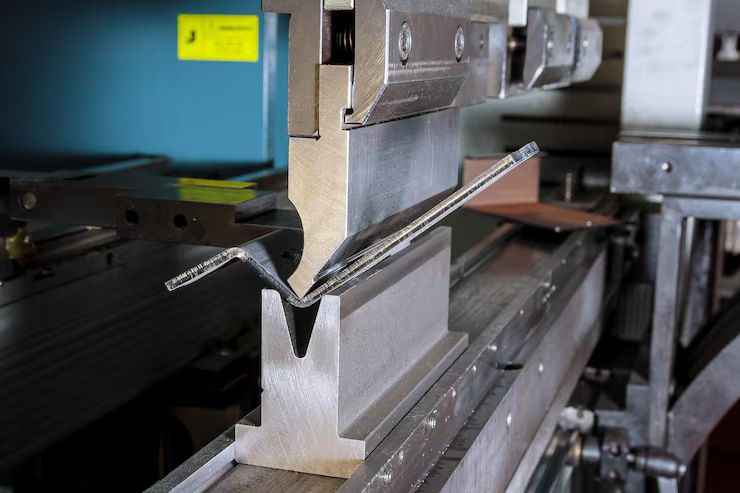
Importance: Why Section Bending Machines Matter Today
Section bending machines play a critical role in industries where accuracy, repeatability, and structural reliability are required.
Why this topic matters today:
-
Complex structural designs: Modern projects frequently include curved beams and frames
-
Precision requirements: Inaccurate bends can weaken structures or cause fitment issues
-
Efficiency: Automated bending reduces manual labor and rework
-
Material integrity: Controlled bending preserves profile strength
-
Industrial scalability: Supports consistent output in high-volume environments
These machines affect fabrication engineers, structural designers, construction planners, maintenance teams, and industrial manufacturers. They solve challenges related to uneven curvature, profile deformation, dimensional inconsistency, and inefficient manual bending processes.
Industries such as construction, shipbuilding, automotive fabrication, railways, aerospace support, energy infrastructure, and architectural metalwork rely heavily on section bending technology.
Recent Updates: Industry Trends and Developments (2024–2025)
Over the past year, section bending machine technology has advanced through improved control systems and accuracy enhancement.
| Year | Development or Trend | Industrial Impact |
|---|---|---|
| 2024 | Increased CNC-based control adoption | Higher repeatability and precision |
| 2024 | Advanced hydraulic balancing systems | Reduced profile distortion |
| 2025 | Digital position feedback integration | Improved curvature consistency |
| 2025 | Modular tooling systems | Faster changeover between profiles |
Recent developments also include better compensation algorithms for springback, stronger machine frames for handling high-strength materials, and improved operator interfaces that simplify setup and monitoring.
Laws, Standards, and Regulatory Influence
Section bending machines operate under general industrial machinery safety and structural fabrication standards.
Common regulatory and standard considerations include:
-
Workplace machinery safety regulations: Cover guarding, emergency stops, and operator protection
-
Structural fabrication standards: Define acceptable tolerances and material handling practices
-
Occupational health guidelines: Address noise, vibration, and ergonomic safety
-
Quality management systems: Require documented bending processes and inspection records
In many regions, structural components produced using section bending machines must comply with building and infrastructure standards, making process accuracy and traceability essential.
Working Principles: How Section Bending Machines Operate
Section bending machines operate by applying controlled force through rollers to gradually bend a metal profile.
Basic working principle explained:
-
A profile is placed between three or four rollers
-
One or more rollers apply adjustable pressure
-
The profile passes repeatedly through the rollers
-
Gradual deformation creates the desired curvature
-
Multiple passes refine radius accuracy
Key operating elements include:
-
Drive rollers: Move the profile forward
-
Bending rollers: Apply controlled pressure
-
Hydraulic or electric systems: Generate bending force
-
Control systems: Regulate roller position and pressure
This gradual bending process minimizes stress concentration and reduces the risk of cracking or cross-section distortion.
Types of Section Bending Machines
Section bending machines are classified based on roller configuration and control method.
Common machine types include:
-
Three-roll section bending machines: Suitable for standard profiles and moderate accuracy
-
Four-roll section bending machines: Offer higher precision and better profile control
-
Hydraulic section benders: Used for heavy-duty industrial applications
-
CNC-controlled machines: Provide programmable bending for complex shapes
-
Universal profile benders: Handle multiple section types with interchangeable tooling
| Machine Type | Key Feature | Typical Use |
|---|---|---|
| Three-roll | Simple operation | General fabrication |
| Four-roll | Improved accuracy | Structural components |
| CNC-controlled | Programmable bending | Precision projects |
| Heavy-duty hydraulic | High force capacity | Large beams |
Accuracy Factors in Section Bending
Accuracy is a central concern in section bending operations.
Key factors affecting accuracy include:
-
Roller alignment and rigidity
-
Material type and thickness
-
Control of bending force
-
Springback compensation
-
Number of bending passes
Modern machines often incorporate digital position sensors, load feedback systems, and pre-programmed bending cycles to maintain consistent curvature across multiple profiles.
Tools and Learning Resources
Understanding section bending machines is supported by technical and educational resources.
Helpful learning resources include:
-
Metal forming engineering textbooks
-
Structural fabrication handbooks
-
Machine operation and safety manuals
-
Industrial manufacturing journals
-
Training guides for CNC bending systems
Reference tools commonly used:
-
Bend radius calculation charts
-
Material springback reference tables
-
Profile deformation diagrams
-
Inspection and quality checklists
These resources help translate theoretical bending principles into practical industrial application.
Frequently Asked Questions
What materials can section bending machines handle?
They commonly process steel, stainless steel, aluminum, and other structural metals.
Why is gradual bending important?
Gradual bending reduces internal stress and prevents profile distortion or cracking.
What is springback in section bending?
Springback is the material’s tendency to partially return to its original shape after bending.
How is bending accuracy verified?
Accuracy is checked using radius gauges, templates, and dimensional inspection tools.
Are section bending machines suitable for large profiles?
Yes. Heavy-duty machines are specifically designed for large beams and thick sections.
Conclusion
Section bending machines are essential tools in modern metal fabrication and structural manufacturing. By enabling precise and repeatable bending of complex profiles, they support advanced architectural designs, robust industrial frameworks, and efficient manufacturing processes.
As industries demand higher accuracy, stronger materials, and flexible production capabilities, section bending technology continues to evolve through improved controls, automation, and structural rigidity. Understanding how these machines work, what affects their accuracy, and how they are regulated provides valuable insight into a critical area of industrial engineering.