Diwali Lighting Ideas: Selection & Arrangement Guide
Lighting is one of the most important elements of Diwali celebrations.
The festival is often associated with illuminated homes, decorative lamps, colorful lanterns, and glowing entrances. Thoughtfully arranged lighting can enhance the festive atmosphere while highlighting architectural features, decorative displays, and gathering spaces.
Selecting suitable lighting and arranging it effectively helps create a balanced and welcoming environment. Whether decorating a small apartment, a family home, or an outdoor space, understanding lighting types and placement strategies can make a noticeable difference.
This guide explains popular Diwali lighting options, arrangement techniques, safety considerations, and practical ideas for creating an attractive festive display.
Quick Facts About Diwali Lighting
| Feature | Description |
|---|---|
| Primary Purpose | Decorative and festive illumination |
| Common Lighting Types | Diyas, LED lights, lanterns, fairy lights |
| Indoor Applications | Living rooms, entrances, pooja areas |
| Outdoor Applications | Balconies, gardens, pathways |
| Popular Color Tone | Warm white lighting |
| Decorative Elements | Rangoli, flowers, lanterns |
| Key Goal | Create a welcoming festive atmosphere |
| Safety Focus | Proper placement and electrical safety |
Understanding Diwali Lighting
Diwali lighting combines traditional and modern decorative elements. Traditional lighting typically includes diyas and candles, while modern decorations often use LED strings, lanterns, and decorative fixtures.
The most successful Diwali displays generally use multiple layers of light rather than relying on a single source. Interior design experts often recommend combining overhead lighting, decorative accent lighting, and floor-level illumination for a balanced effect.
Why Lighting Matters During Diwali
Lighting contributes to the visual appeal of the celebration and helps create a warm, inviting atmosphere for family gatherings and festive events.
Benefits include:
- Improved decorative appearance
- Enhanced festive ambiance
- Better visibility in gathering areas
- Highlighting decorative features
- Creating welcoming entrances
- Supporting indoor and outdoor celebrations
Main Types of Diwali Lighting
Traditional Diyas
Diyas remain one of the most recognized Diwali lighting elements.
Common Placement Areas
- Doorways
- Windowsills
- Rangoli borders
- Staircases
- Pooja areas
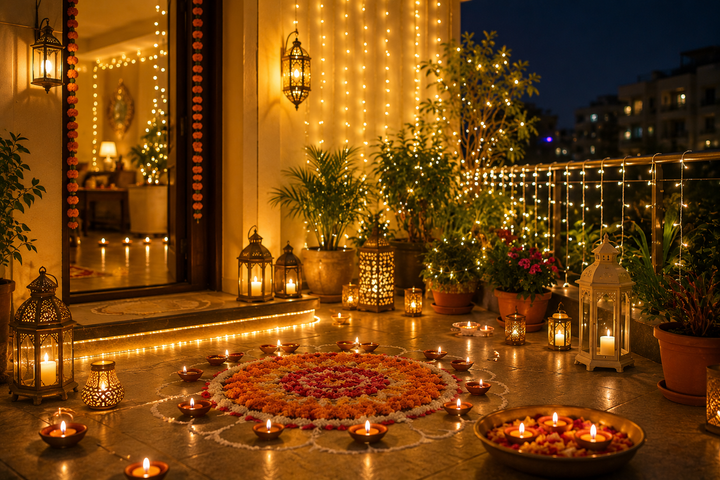
Traditional diyas are often arranged in rows to create a welcoming entrance.
Decorative Candles
Candles provide soft illumination and are available in various shapes and designs.
Advantages
- Attractive appearance
- Easy placement
- Suitable for centerpieces
- Available in multiple styles
Fairy Lights
Fairy lights are widely used for decorating walls, balconies, windows, and furniture.
Benefits
- Flexible installation
- Suitable for indoor and outdoor use
- Consistent illumination
- Various lighting patterns
LED String Lights
LED strings are commonly used for larger decorative displays.
Features
- Energy-efficient operation
- Long operational life
- Available in different colors
- Suitable for large areas
Lanterns and Kandils
Traditional lanterns remain popular decorative elements during Diwali.
Common Uses
- Entrance decoration
- Balcony lighting
- Outdoor display enhancement
Diwali Lighting Comparison
| Lighting Type | Best Application | Visual Effect |
|---|---|---|
| Diyas | Entrances and rangoli | Traditional glow |
| Candles | Tables and centerpieces | Soft illumination |
| Fairy Lights | Walls and windows | Decorative sparkle |
| LED Strings | Large spaces | Uniform lighting |
| Lanterns | Balconies and entrances | Festive focal point |
Diwali Lighting Architecture
Understanding lighting layers can help create a balanced arrangement.
Layer 1: Ambient Lighting
Ambient lighting provides overall illumination throughout the space.
Examples include:
- Ceiling fixtures
- Pendant lights
- Wall lights
Layer 2: Accent Lighting
Accent lighting highlights decorative features.
Examples include:
- Fairy lights
- Lanterns
- Decorative lamps
Layer 3: Feature Lighting
Feature lighting draws attention to specific decorative areas.
Examples include:
- Rangoli illumination
- Floating candles
- Decorative centerpieces
Layer 4: Floor-Level Lighting
Floor-level lighting creates warmth and depth.
Examples include:
- Diyas
- Tea lights
- Decorative floor lamps
Many home decor experts recommend a layered lighting approach using warm overhead lighting, accent lighting, and decorative lamps.
How to Select Diwali Lighting
Consider Available Space
Smaller homes often benefit from compact decorative lighting arrangements.
Choose Appropriate Brightness
Excessive brightness may reduce the warm atmosphere associated with Diwali celebrations.
Match Lighting Style
Traditional decorations pair well with diyas and lanterns, while modern interiors may incorporate LED lighting.
Evaluate Indoor and Outdoor Needs
Different areas may require different lighting solutions.
Focus on Warm Color Temperatures
Warm white lighting is frequently recommended because it complements the appearance of diyas and festive decorations.
Room-by-Room Lighting Arrangement Guide
Entrance Area
The entrance creates the first impression.
Recommended elements:
- Diyas along pathways
- Decorative lanterns
- Rangoli lighting
- Warm accent lighting
Living Room
The living room is often the primary gathering area.
Recommended elements:
- Fairy lights
- Decorative lamps
- Candle centerpieces
- Warm ambient lighting
Pooja Room
Lighting should support a calm and welcoming atmosphere.
Recommended elements:
- Diyas
- Soft warm lighting
- Decorative lanterns
Balcony
Balconies can become attractive focal points during evening celebrations.
Recommended elements:
- LED strings
- Hanging lanterns
- Decorative lamps
Garden Areas
Outdoor spaces can be enhanced with layered lighting.
Recommended elements:
- Pathway lights
- Lanterns
- Decorative string lights
Diwali Lighting Placement Guide
| Location | Recommended Lighting |
|---|---|
| Main Entrance | Diyas and lanterns |
| Living Room | Fairy lights and candles |
| Balcony | LED strings and lanterns |
| Pooja Area | Diyas and warm accent lights |
| Garden Pathways | Decorative pathway lights |
| Windows | Fairy lights |
Arrangement Ideas for Small Homes
Limited space does not prevent effective Diwali decoration.
Use Vertical Space
Decorate walls, windows, and railings.
Focus on Key Areas
Concentrate lighting around:
- Entrance
- Living room
- Pooja area
Avoid Clutter
A few well-placed lighting elements often create a better visual effect than excessive decorations.
Create a Focal Point
Choose one primary decorative feature and build lighting around it.
Smart Lighting Technologies
Modern lighting technology offers additional flexibility.
Programmable LED Lighting
Allows different lighting patterns and effects.
Motion-Based Lighting
Suitable for pathways and entrances.
Timer Functions
Automates lighting schedules.
Energy-Efficient LED Systems
Support extended operation while maintaining efficiency.
Environmental Considerations
Energy Efficiency
LED lighting generally consumes less electricity than traditional decorative lighting options.
Reduced Waste
Reusable decorative lighting can be used across multiple festive seasons.
Sustainable Decoration
Combining reusable lighting with traditional decorative elements can support more sustainable celebrations.
Responsible Power Usage
Switching off unnecessary lighting helps improve overall energy efficiency.
Industry Standards and Safety
Safety should always remain a priority during festive decoration.
Electrical Safety
Inspect lighting connections before installation.
Heat Management
Avoid placing lighting near flammable materials.
Stable Placement
Ensure decorative lamps and lanterns are positioned securely.
Cable Organization
Keep electrical cables organized to reduce tripping hazards.
Outdoor Protection
Use lighting suitable for outdoor conditions when decorating exterior spaces.
Common Challenges and Solutions
| Challenge | Practical Solution |
|---|---|
| Uneven Lighting | Use layered lighting arrangements |
| Overcrowded Decorations | Focus on key display areas |
| Limited Space | Utilize vertical surfaces |
| Outdoor Exposure | Use weather-resistant lighting |
| Visibility Issues | Combine ambient and accent lighting |
| Electrical Clutter | Organize cables carefully |
Best Practices for Diwali Lighting
- Use layered lighting designs.
- Select warm white lighting where possible.
- Highlight entrances and gathering areas.
- Maintain clear walkways.
- Inspect decorative lighting before use.
- Balance traditional and modern lighting elements.
- Position decorative lights thoughtfully rather than covering every surface.
Expert Insights
Home decoration specialists often recommend focusing on a few important zones rather than decorating every room extensively. Entrances, living rooms, balconies, and pooja spaces typically provide the greatest visual impact during Diwali celebrations. Layered lighting using warm illumination, decorative accents, and traditional diyas is frequently considered the most effective approach.
Key Facts About Diwali Lighting
| Fact | Explanation |
|---|---|
| Warm Lighting Is Preferred | Complements traditional decorations |
| Layered Lighting Creates Depth | Improves overall visual appeal |
| Diyas Remain Popular | Traditional festive symbol |
| Fairy Lights Are Versatile | Suitable for many applications |
| Entrances Receive Major Focus | Creates a welcoming atmosphere |
| LED Lighting Is Common | Supports energy-efficient decoration |
Future Trends and Industry Insights
Smart Decorative Lighting
Connected lighting systems continue to become more common.
Energy-Efficient Displays
LED technology remains a leading choice for festive decoration.
Minimalist Arrangements
Many homeowners increasingly favor clean, elegant lighting designs.
Decorative Integration
Lighting is increasingly combined with floral arrangements, wall décor, and architectural elements.
Sustainable Celebrations
Reusable decorative lighting continues to gain popularity.
Frequently Asked Questions
What are the most popular Diwali lighting options?
Diyas, fairy lights, lanterns, candles, and LED strings are among the most commonly used options.
Which color temperature works best for Diwali?
Warm white lighting is often preferred because it complements traditional decorations.
How should lighting be arranged in a small apartment?
Focus on entrances, windows, and a few key decorative areas rather than decorating every surface.
Why is layered lighting important?
Layered lighting creates depth, balance, and visual interest.
Are fairy lights suitable for indoor decoration?
Yes, they are commonly used for walls, windows, and furniture decoration.
Where should diyas be placed?
Entrances, rangoli borders, windowsills, and pooja spaces are common locations.
What is accent lighting?
Accent lighting highlights decorative features and focal points.
How can balconies be decorated for Diwali?
LED strings, lanterns, and decorative lamps are commonly used.
What safety measures should be followed?
Inspect wiring, avoid overcrowding electrical outlets, and keep decorative lighting away from flammable materials.
Can modern and traditional lighting be combined?
Yes, combining diyas with LED lighting and lanterns can create a balanced festive display.
Conclusion
Diwali lighting plays a central role in creating a festive and welcoming environment. By understanding different lighting types, arranging them strategically, and following safety practices, homeowners can create attractive decorative displays that suit both traditional and modern spaces.
A thoughtful combination of diyas, lanterns, fairy lights, and warm ambient lighting can transform entrances, living rooms, balconies, and outdoor areas into inviting festive spaces. Proper selection and arrangement help ensure that Diwali decorations remain visually appealing, functional, and memorable for family and guests alike.